

Contact Lenses after Eye Laser Surgery (Aftercare): are They Even Necessary?
Imagine the surgery like a wardrobe reset: everything superfluous is removed – including glasses and contact lenses. That’s precisely the goal of eye laser surgery. And yet the question arises: “Contact lenses after eye laser surgery – are they even necessary?” In short: almost never, sometimes briefly – and only with medical approval.
The Most Important Things at a Glance:
- The goal remains freedom from lenses: Contact lenses after surgery are exceptions – e.g., as a therapeutic bandage lens or a short-term bridge for fluctuations in early healing.
- Timeline (guidelines): 0-1 week: no personal lenses. Week 2-6: only with approval, if at all, then briefly and preferably daily disposable lenses. After that: individually depending on the method, tear film, and tolerance.
- Dos & Don’ts: Excellent hygiene, lubricating eye drops readily available, plan screen breaks. Taboo in the early phase: colored lenses, sleeping with lenses, water/sweat in the eye.
- The dry eye phase is normal: The tear film stabilizes. Helpful: artificial tears, 20-20-20 rule, pleasant room climate. Re-evaluate lens tolerance if necessary.
Auf dieser Seite8 Abschnitte
- The “Paradox” Explained: Freedom from Glasses and Rare Exceptions
- Special Cases where Contact Lenses may Make Sense after Laser Surgery
- Which Contact Lenses are Suitable after Eye Laser Surgery?
- What is Allowed – and from when?
- Dos & Don’ts Regarding Contact Lenses after Eye Laser Surgery
- Tear Film & Lens Tolerance after Surgery
- What Dr. Derhartunian Says about Contact Lenses after Eye Surgery
- Questions and Answers
The “Paradox” Explained: Freedom from Glasses and Rare Exceptions
The question sounds like a tongue twister for logic: Why talk about contact lenses if you want to get rid of them after eye laser surgery? Quite simply: the goal is and remains freedom from glasses in everyday life – without glasses, without lenses. Nevertheless, there are rare exceptions where contact lenses may be temporarily useful. Sometimes a therapeutic bandage lens supports healing (e.g., for surface procedures), and occasionally a short-term correction bridges minor fluctuations in early regeneration.
This doesn’t change the fundamental idea of the surgery – it’s more like a plaster after sports: put on briefly so it heals better, and then removed.
Special Cases where Contact Lenses may Make Sense after Laser Surgery
After successful laser treatment, contact lenses are not a new permanent chapter, but – if at all – rare, targeted solutions. Three scenarios occur in practice:
Transitional Correction for Residual Refractive Error – Time-Limited
Sometimes after surgery, a small residual refractive error remains or vision fluctuates in the first few weeks. In such cases, a short-term, soft daily disposable lens can help – exclusively with medical approval.
- Goal: Comfort and function until the tear film and visual acuity stabilize.
- Important: A temporary lens does not replace medical assessment. If a residual refractive error persists, a joint decision will be made whether glasses or contact lenses for special occasions or an eye laser enhancement is appropriate.
Rigid Gas Permeable/Specialty Lenses for Special Corneal Issues
Rarely, specific corneal conditions (e.g., pronounced irregular astigmatism, special surface findings) are present, where rigid gas permeable (RGP) or special dimensions (e.g., scleral lenses) can temporarily improve imaging quality.
- Pros: Very good oxygen supply, precise imaging on “difficult” surfaces.
- Cons: Fitting and adaptation are more demanding; close monitoring required.
- Conclusion: Only fitted by specialists and with a clear medical indication – not standard after laser surgery.
Ortho-K after Surgery?
Generally no. Ortho-K temporarily reshapes the cornea overnight – after laser treatment, this is neither intended nor advisable. The altered corneal geometry and biomechanics make Ortho-K unpredictable postoperatively.
- For later changes in vision, the following applies: first clarify with a doctor and then discuss glasses, contact lenses for specific situations, or a possible enhancement – do not simply use Ortho-K.
Which Contact Lenses are Suitable after Eye Laser Surgery?
| Lens Type | Tolerance | Why (briefly) | Typical Use After Surgery | Conclusion |
|---|---|---|---|---|
| SiHy Daily Disposable Lenses | Very High | High oxygen permeability (Dk/t), fresh every day → no care product/preservative residues, few deposits | Short-term bridging, event-related (e.g., rare situations) | First choice, if lenses are worn at all – gentle & pragmatic |
| Hydrogel Daily Disposable Lenses (without silicone) | Medium–High | Often softer/“softer feel”, therefore subjectively comfortable; but lower O₂ permeability than SiHy | Alternative if SiHy daily disposable lenses are perceived as too “firm” | Good Plan B option – pay attention to short wearing time |
| Monthly Lenses | Medium | More care chemicals, higher deposit/infection risk, longer daily wearing times are common → suboptimal for the early healing phase | Rather later, only with very good tolerance & hygiene | Use sparingly; daily disposable lenses are usually better |
| Rigid Gas Permeable (RGP) | Specific | Very oxygen permeable, but edge sensation/fitting more demanding; usually not necessary after regular laser surgery | Special indications (rare irregularities) | Only medically justified and fitted |
| Scleral Lenses/PROSE | Specific | “Tear lake” effect can buffer severe dry eye conditions; handling complex | Only for pronounced special cases | Not routine – pure exception |
| Ortho-K (Night Lenses) | Low | Temporarily reshapes the cornea – not advisable after successful surgery | – | No after surgery |
| Colored Lenses/“Fun” Lenses | Low | Higher irritation/germ risk, often lower O₂ values | – | In the healing phase definitely no; later only rarely & cautiously |
What is Allowed – and from when?
0-1 Week: No Personal Lenses but Bandage Lens
In the first few days, healing takes priority. Personal contact lenses are not allowed.
- Bandage lens: Only if medically inserted (e.g., for surface procedures).
- For SmartSight (EyeLaser Vienna): Generally, no bandage lens is necessary.
- Important: Adhere strictly to the drop schedule, do not rub, no water/sweat in the eye.
2-6 Weeks: Test Only with Approval
The tear film stabilizes but is still sensitive. Test contact lenses exclusively with medical approval and for short periods.
- If at all, then daily disposable lenses (fresh, without care chemicals).
- Discontinuation criteria: Pressure, burning, redness, “gritty” sensation → remove lens immediately and contact the clinic.
- Taboo: Colored/fun lenses, sleeping with lenses, sports/swimming with lenses during this phase.
After that: Individually Depending on Method, Healing & Tolerance
From week 6, the individual healing process determines. Many no longer need lenses at all; for individual questions (e.g., night driving), targeted, short-term use may be advisable – always according to medical recommendation.
- Re-evaluate material & fit (tear film may have changed).
- Basic rule: At any discomfort, remove immediately – eyes take priority.
Dos & Don’ts Regarding Contact Lenses after Eye Laser Surgery
Do: Hygiene, Lubricating Eye Drops, Screen Breaks & Clean Handling
In short: as much protection as necessary, as little friction as possible.
- Clean hands: Wash thoroughly and dry lint-free before any eye contact. No disinfectant gel directly into the eye.
- Lubricating eye drops: Use preservative-free artificial tears as recommended; preferably small drops more often than a lot rarely.
- Screen breaks: 20-20-20 rule (look 20 feet away for 20 seconds every 20 minutes) – this stabilizes the tear film.
- If lenses, then minimally: Test only with medical approval, wear for short periods, preferably soft daily disposable lenses (fresh, no care residues).
- Clean handling: Never rub lenses dry; remove immediately if uncomfortable and contact EyeLaser Vienna.
Don’ts: Colored Lenses, Sleeping with Lenses, Water / Sweat in the Eye
What slows down your healing stays out.
- No colored/“fun” lenses in the early phase: increased irritation and germ risks.
- Do not sleep with lenses: Overnight wear increases the risk of inflammation and infection – even later, only if explicitly approved.
- No water/sweat in the eye: In the first few weeks, avoid swimming pools, lakes, saunas/steam baths with lenses; use protective eyewear during sports.
- No self-optimization: No external agents (eye sprays, whitening drops) without approval, do not rub, do not use up old care solutions.
Tear Film & Lens Tolerance after Surgery
Immediately after the procedure, the corneal nerves are still irritated; signals for “re-wetting!” arrive somewhat dampened. In addition, there is often a lot of screen time (less blinking) and heating air in winter – both cause tears to evaporate faster.
What has proven beneficial:
- Preservative-free lubricating eye drops regularly, preferably small amounts frequently.
- 20-20-20 rule for screen use: every 20 minutes, look about 20 feet away for 20 seconds and blink consciously.
- Optimize room climate: Humidifiers, brief ventilation, avoid drafts.
- Gentle environment: No rubbing, no aerosol sprays on the face, sunglasses/protective eyewear outdoors.
- In the evening, if necessary, a few more drops (preservative-free), if it gets “too dry.”
What Dr. Derhartunian Says about Contact Lenses after Eye Surgery
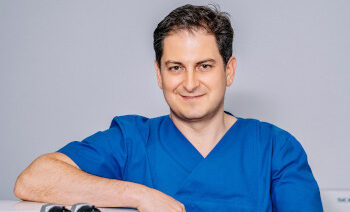
“Our goal is freedom from glasses – period. If a lens does come into play after surgery, it’s as a brief, justified exception and only with approval.”
– Dr. Victor Derhartunian
His rule of thumb: “First ask, then insert.” During the follow-up appointment, the EyeLaser team will tell you exactly when what is advisable again – and whether you need a lens at all. The goal remains: freedom from glasses, every day.
Questions and Answers
Can I Wear Lenses Again at all after Surgery?
Basically yes – but not routinely. After successful surgery, the goal is freedom from lenses; if contact lenses become an issue at all, it’s as an exception and for a limited time (e.g., as a temporary solution) and only with medical approval.
When are Daily Disposable Lenses Okay after Eye Laser Surgery?
Not at all during the first 7 days. Between week 2 and 6, – after approval – a brief test with soft daily disposable lenses may be advisable. After that, the individual course (method, tear film, tolerance) decides; many no longer need lenses at all.
Are Colored Lenses Allowed for Events?
In the early healing phase: no. Colored/“fun” lenses increase irritation and germ risk and are only an option much later and only after approval – if at all. For one-off occasions, daily disposable lenses without color are the more tolerable option.
Fluctuating Vision in the Evening – Does a Temporary Lens Help?
Sometimes yes, temporarily and specifically. Fluctuations often come from the tear film; artificial tears, breaks, and a good room climate often already help. If a temporary lens makes sense, the EyeLaser Vienna team will choose the most tolerable option (usually a daily disposable lens) – for a limited time and only with approval.