
Feel liberated with the latest SmartSight laser eye surgery

In this video, Dr. Victor Derhartunian explains how patients feel after changing their vision with this precise and gentle treatment

Basics of femtosecond lenticule extraction

Woman resting her chin on a measuring device during an eye examination

Lenticule extraction is a minimally invasive procedure used in refractive surgery. The correction of the visual defect is achieved by changing the curvature of the cornea. A femtosecond laser is used for the procedure. This emits extremely short pulses of light. This creates a lenticular piece of tissue in the cornea, also known as a lenticule.

The laser makes a tiny incision through which the lenticule can then be removed. Without the lenticule, the refractive error that previously led to defective vision no longer occurs. The procedure is painless thanks to local anesthesia and vision improves noticeably immediately after the treatment. Ideally, glasses or contact lenses can be completely dispensed with after lenticule extraction.

For whom does lenticel extraction make sense?

Lenticule extraction is ideal if you want to permanently correct your visual defect so that you no longer need to wear glasses or contact lenses. This modern procedure is approved for the treatment of short-sightedness and astigmatism. Farsightedness cannot be cured by lenticule extraction – however, there are other laser eye surgery methods that promise sharp vision.

The following visual defects can / may be treated by lenticule extraction:

The patient must also be at least 18 years old and not suffer from an infection or autoimmune disease such as lupus. Corneal diseases and heavily scarred corneas may also be a reason why lenticule extraction is not an option for you.

In order to clarify whether you are suitable for such treatment, an initial examination by the EYELASER specialists on site is essential. During the non-binding initial examination, it will be determined whether lenticule extraction is promising for you and you can ask all your questions.

Secure a non-binding initial examination now

Contraindications to lenticel extraction:

Contraindications are circumstances that mean that a certain procedure – in this case lenticule extraction – cannot be used. It is crucial that your cornea is sufficiently thick, as a thin cornea is an argument against lenticule extraction. Further exclusion criteria are

  • Progressive corneal diseases
  • Keratoconus
  • Changes in refractive power at short intervals
  • Glaucoma with visual field damage
  • Cataract (cataract)
  • Pregnancy of the patient

Lenticular extraction treatment procedure

The treatment process depends on which procedure you choose. The principle behind Smart Sight, Clear, Silk and Relex Smile is very similar, although some of the different variants differ slightly from one another. You can find out more about the special features of the individual lasers at Lenticular extraction laser in comparison.

Typical preliminary examinations for best results

The preliminary examination lays the foundation for a successful lenticule extraction. The aim is to correctly record the treatment parameters and rule out all contraindications. The basis for this is the determination of the exact refractive power by an optometrist or ophthalmologist. Other typical lenticule extraction preliminary examinations include

  • Measurement of corneal thickness
  • Determination of corneal curvature and irregularities
  • Determination of pupil size
  • Determination of intraocular pressure

These examinations are used to take a medical history and record all the data that will have an influence on the actual lenticule extraction. Accordingly, the treatment or laser is individually adapted to your eyes in order to achieve the best possible results for you.

Different methods of lenticel extraction

Today, there are three leading procedures that are carried out with corresponding femtosecond lasers from the manufacturers Schwind, Zeiss and Ziemer. The methods differ mainly in the range of functions provided by the laser. Get to know the lenticule extraction procedures in detail:

  1. Smart Sight from Schwind
  2. Relex Smile (Pro) from Zeiss
  3. Clear from Ziemer
  4. Silk from Johnson & Johnson
Healing process and completion of treatment

Immediately after the operation, it is normal for the eye to water or itch a little. Your vision will be blurred and you can leave the laser eye center to rest. You will be given special medication to soothe your eyes and support the healing process.

The first follow-up appointment takes place shortly after the procedure to check how the lenticule extraction has gone. The day after the lenticule extraction, visual performance is already at a significantly better level. At a further follow-up appointment a few weeks later, healing should be complete and your eyes should have adjusted to the new vision. This is usually the end of the treatment.

While vision may still appear unstable in the first few days, the eyes become accustomed to the new impressions within a few weeks and final stability or the final visual result is achieved after four to six weeks.

Laughing man with curly hair outdoors

Eye surgery with measurable precision

Two countries, one protocol. Care is our standard

Everything here (even the coffee) is done with the same care.

There’s a right way and a wrong way

The right clinic is not too cheap, too “chain” or too costly. The right clinic is precisely right.

Thorough before every procedure

Before every procedure, a thorough preliminary examination clarifies whether and how it makes sense for your eyes.

Two countries, one protocol. Care is our standard

Everything here (even the coffee) is done with the same care.

There’s a right way and a wrong way

The right clinic is not too cheap, too “chain” or too costly. The right clinic is precisely right.

Thorough before every procedure

Before every procedure, a thorough preliminary examination clarifies whether and how it makes sense for your eyes.

Your laser eye surgery specialists at the Eye Laser Center Austria

Dr. Victor Derhartunian, FEBO, FWCRS & Dr. Paul Jirak, FEBO, in Vienna & Linz – recognised by patients with the DocFinder Patients’ Choice Award

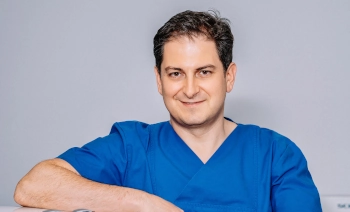
Dr. Victor Derhartunian in blue surgical scrubs, smiling against a grey background
Ophthalmologist, specialist in refractive surgery
FEBO

Dr. Victor Derhartunian, FEBO, FWCRS, heads EyeLaser Vienna and has performed more than 25,000 laser procedures. He advises patients in German, English, Polish and French.

Learn more
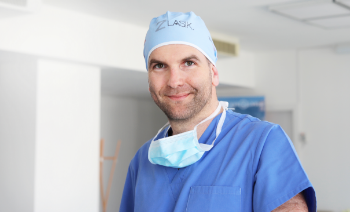
Dr. Paul Jirak smiling in surgical scrubs in the treatment room
Ophthalmologist, specialist in refractive surgery
FEBO

Dr. Paul Jirak, FEBO, is a specialist in ophthalmology and co-founder of a laser eye surgery centre in Austria. He has been treating patients in Linz since 2014. His focus is eye surgery and laser eye surgery.

Learn more
Assoc. Prof. Priv.-Doz. Dr. Christina Leydolt smiling in front of a window
Ophthalmologist, specialist in artificial lenses and cataracts
FEBO

Dr. Leydolt is an ophthalmologist and specializes in cataract and lens surgery. She heads a research group with this focus, trains young surgeons and gives international lectures.

Learn more
Dr. Victor Derhartunian in blue surgical scrubs, smiling against a grey background
Ophthalmologist, specialist in refractive surgery
FEBO

Dr. Victor Derhartunian, FEBO, FWCRS, heads EyeLaser Vienna and has performed more than 25,000 laser procedures. He advises patients in German, English, Polish and French.

Learn more
Dr. Paul Jirak smiling in surgical scrubs in the treatment room
Ophthalmologist, specialist in refractive surgery
FEBO

Dr. Paul Jirak, FEBO, is a specialist in ophthalmology and co-founder of a laser eye surgery centre in Austria. He has been treating patients in Linz since 2014. His focus is eye surgery and laser eye surgery.

Learn more
Assoc. Prof. Priv.-Doz. Dr. Christina Leydolt smiling in front of a window
Ophthalmologist, specialist in artificial lenses and cataracts
FEBO

Dr. Leydolt is an ophthalmologist and specializes in cataract and lens surgery. She heads a research group with this focus, trains young surgeons and gives international lectures.

Learn more

Advantages and disadvantages of lenticel extraction

Lenticular extraction is a relatively new process, but one that is used frequently today. The reason for this is simple: the advantages of lenticel extraction far outweigh the disadvantages.

Advantages:
  • High chances of success and excellent treatment results
  • Short and painless treatment
  • Immediate visual improvement and fast healing process
  • Very precise and gentle on the cornea with the new methods
  • Even severe visual defects can be corrected
  • Low risk of infection compared to implants
  • Safe procedure with rare complications
Disadvantages:
  • Corneal structure can be weakened by the procedure
  • Correction options depend on corneal thickness and pupil size
  • Flap risks with older methods (not with the methods mentioned above)

Discover which eye treatment is best for you with this 1-minute quiz

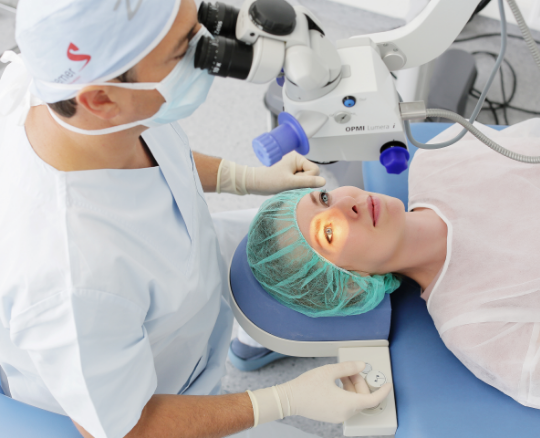
Surgeon at an operating microscope, female patient in a hair cap lying on the table

Things like age, eye shape, history and lifestyle make an eye treatment perfect for one person, but not another. Find out which treatment (if any) could free you from glasses and contacts

Take a quiz

Lenticel extraction risks / side effects?

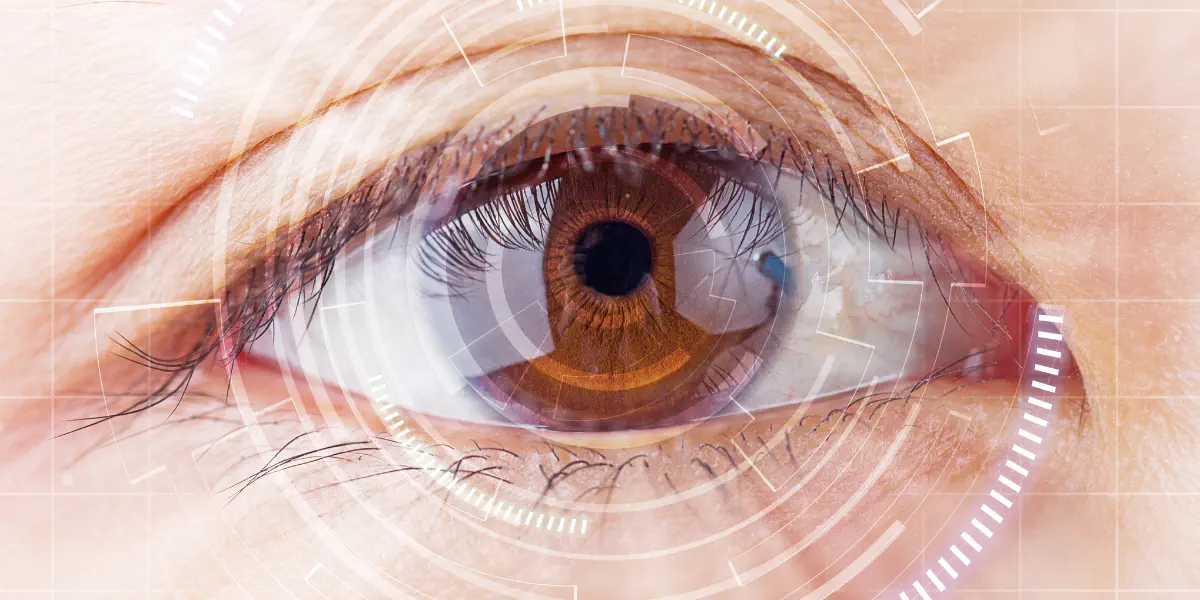
Close-up of an eye with a digital scan overlay

Every procedure involves a certain degree of risk and complications can never be completely ruled out. With lenticule extraction, the procedure, the technique and the surgeon’s experience are crucial. During your examination and preparations, you will be fully informed about the possible risks and side effects of lenticule extraction.

The following after-effects may occur, but are very rare and usually reversible / treatable:

  • Restrictions on twilight and night vision
  • Glare and halos
  • Infection of the eye
  • After the operation: dry eyes and blurred vision

Which procedure is best suited?

Lenticule extraction is a safe, effective and highly regarded procedure in medicine for correcting visual defects. The leading manufacturers of eye lasers have each developed their own procedure – specially adapted to the corresponding femtosecond laser. You can find out more about lasers and lenticule extraction from Schwind, Zeiss, Johnson&Johnson and Ziemer here:

At EYELASER, we use SmartSight and the Schwind ATOS laser. We only explain the three most common procedures.

Frequently asked questions (FAQ) about lenticule extraction

Lenticule extraction (ReLEx SMILE and SmartSight) is one of the most modern methods of laser eye treatment. Here you can find out all about this gentle procedure: How it works, who it is suitable for and what advantages it offers over other laser methods.

What is lenticule extraction and how does the treatment work?

Lenticule extraction is a state-of-the-art minimally invasive laser eye surgery procedure. It is used to correct short-sightedness and astigmatism. It cannot (yet) be used to correct long-sightedness. Using a femtosecond laser, a wafer-thin, lens-shaped piece of tissue (lenticule) is cut out of the cornea and removed through a small opening. This changes the shape of the cornea in such a way that the visual defect is corrected or healed.

Who is lenticel extraction suitable for?

For people with short-sightedness or astigmatism. The limit values are around -8 diopters for short-sightedness and around 5 diopters for astigmatism. Patients with a thinner cornea, which could cause problems with other procedures, benefit in particular, as no large corneal incisions need to be made during lenticule extraction with ReLEx SMILE or SmartSight.

What distinguishes lenticule extraction from other laser procedures?

While a lot of surface area is removed during Trans-PRK and a flap has to be cut during Femto-LASIK, lenticule extraction is gentler and only requires a tiny corneal incision. This also reduces the risk of dry eyes after the procedure, ensures low-complication healing and greater stability. What is special is that no other procedure involves the shaping and removal of a lenticule.

What lenticel extraction methods are there and what is the difference between them?

Various manufacturers each offer their “variant” of lenticule extraction. The best known are ReLEx SMILE and SmartSight. ReLEx SMILE has already established itself on the market and works with a special femtosecond laser. SmartSight is performed with a newer laser from SCHWIND, which is designed to work even more precisely and with fewer side effects. This is ensured by numerous technical aids such as automatic centering and lenticular geometry.

Both procedures are minimally invasive, effective and safe. At EyeLaser, we rely on the modern SmartSight variants with their individual advantages.

What does SmartSight / ReLEx SMILE & Co. (lenticular extraction) cost?

The price depends on the laser eye center, the chosen method (SmartSight or ReLEx SMILE) and the location. At EyeLaser, lenticule extraction costs just as much as a Femto-LASIK 7D Premium treatment at €2,500 per eye. This includes the preliminary examination, procedure, material, consultation and aftercare.

There are also attractive financing options: either pay interest-free in 3 convenient installments within 6 months or take advantage of a low-interest loan from a partner bank from as little as 48 euros per month.

4,9 von 5 – über 240 Google-Bewertungen für EyeLaser Wien & Linz