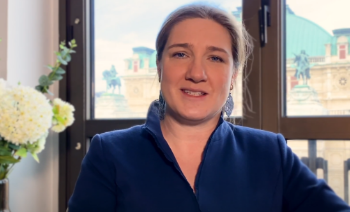
Feel liberated with the latest SmartSight laser eye surgery

In this video, Dr. Victor Derhartunian explains how patients feel after changing their vision with this precise and gentle treatment

What is a femtosecond laser?

The femtosecond laser is characterized by the fact that it emits laser light with a pulse frequency of femtoseconds. In this extremely short time, the beam moves only 0.001 millimeters away from the source, which corresponds to one hundredth of a hair. Simply put, the femtosecond laser is extremely precise and can make delicate cuts with pinpoint accuracy.

Compared to a procedure with a fine scalpel, the laser is many times more precise, which can make all the difference in such a sensitive tissue as the cornea. The femtosecond laser can be used to perform various laser eye procedures – e.g. for

  • Femtosecond lenticule extraction
  • Femtosecond cataract surgery (for cataracts)
  • Femto-LASIK
  • Other specific corneal incisions (keratotomy, ring segments, etc.)

The devices from Schwind, Zeiss, J&J and Ziemer are each large systems in which the patients are positioned on a couch under the laser. The entire procedure is performed with a femtosecond laser.

What does the laser do during lenticule extraction?

The entire lenticule extraction can be performed with the femtosecond laser. This is a minimally invasive refractive surgery procedure. The curvature of the cornea is changed so that myopia or astigmatism can be corrected.

  • Extremely short pulses of light are used to form a lenticular piece of tissue (the lenticule)
  • In order to remove the lenticule, the laser makes a tiny incision

Removing the lenticule corrects the refractive error that was previously responsible for the defective vision. Femtosecond lenticule extraction is painless for patients as the eye is anesthetized and it only takes a few minutes.

SmartSight: Schwind ATOS Laser

The modern SCHWIND ATOS femtosecond laser enables minimally invasive lenticule extraction using the Smart Sight method. The ATOS can also be used to create the flap during FemtoLASIK. The innovative technology and optimized design ensure maximum safety and precision.

  • Particularly safe thanks to eye tracking and cyclotorsion compensation
  • Precision through exact centering (especially with pronounced astigmatism)
  • Pleasant to use due to curved patient interface
  • Large flap diameter due to optimized design of the contact glass
  • Convenient to use and compact
  • Supports the attending physician with intuitive control, clear planning and process-optimized workflows

With Smart Sight, no flap is cut during lenticule extraction, which eliminates all flap-related risks. There is also no corneal ablation – as occurs with the excimer laser. The Schwind ATOS is tissue-friendly and state-of-the-art.

Clear: Ziemer Z8 Laser

Ziemer is a Swiss company that has made a name for itself in recent years. The Z8 femtosecond laser from Ziemer is the latest solution used for lenticule extraction with the Clear procedure. The laser stands out in particular due to its “low energy concept”. Because the laser is particularly close to the eye, a precise laser is generated that requires comparatively little energy per pulse.

  • Optimized performance for better incision quality and lens fragmentation (for cataract surgery)
  • Efficient working with OCT and TopView Imaging during the procedure
  • Compact design for space-saving and cost-efficient use
  • Contact element that fits the majority of eyes and is comfortable to wear
  • Wide range of applications: Clear, cataract surgery, LASIK, DALK 2.0
  • Simple operation thanks to optimized planning and control software

Eye surgery with measurable precision

Two countries, one protocol. Care is our standard

Everything here (even the coffee) is done with the same care.

There’s a right way and a wrong way

The right clinic is not too cheap, too “chain” or too costly. The right clinic is precisely right.

Thorough before every procedure

Before every procedure, a thorough preliminary examination clarifies whether and how it makes sense for your eyes.

Two countries, one protocol. Care is our standard

Everything here (even the coffee) is done with the same care.

There’s a right way and a wrong way

The right clinic is not too cheap, too “chain” or too costly. The right clinic is precisely right.

Thorough before every procedure

Before every procedure, a thorough preliminary examination clarifies whether and how it makes sense for your eyes.

Your laser eye surgery specialists at the Eye Laser Center Austria

Dr. Victor Derhartunian, FEBO, FWCRS & Dr. Paul Jirak, FEBO, in Vienna & Linz – recognised by patients with the DocFinder Patients’ Choice Award

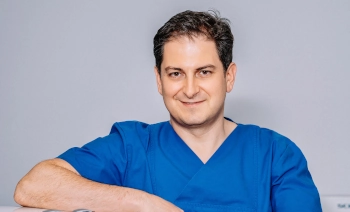
Dr. Victor Derhartunian in blue surgical scrubs, smiling against a grey background
Ophthalmologist, specialist in refractive surgery
FEBO

Dr. Victor Derhartunian, FEBO, FWCRS, heads EyeLaser Vienna and has performed more than 25,000 laser procedures. He advises patients in German, English, Polish and French.

Learn more
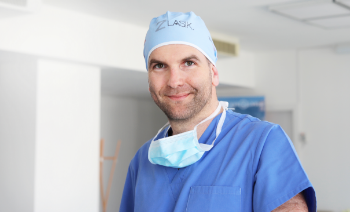
Dr. Paul Jirak smiling in surgical scrubs in the treatment room
Ophthalmologist, specialist in refractive surgery
FEBO

Dr. Paul Jirak, FEBO, is a specialist in ophthalmology and co-founder of a laser eye surgery centre in Austria. He has been treating patients in Linz since 2014. His focus is eye surgery and laser eye surgery.

Learn more
Assoc. Prof. Priv.-Doz. Dr. Christina Leydolt smiling in front of a window
Ophthalmologist, specialist in artificial lenses and cataracts
FEBO

Dr. Leydolt is an ophthalmologist and specializes in cataract and lens surgery. She heads a research group with this focus, trains young surgeons and gives international lectures.

Learn more
Dr. Victor Derhartunian in blue surgical scrubs, smiling against a grey background
Ophthalmologist, specialist in refractive surgery
FEBO

Dr. Victor Derhartunian, FEBO, FWCRS, heads EyeLaser Vienna and has performed more than 25,000 laser procedures. He advises patients in German, English, Polish and French.

Learn more
Dr. Paul Jirak smiling in surgical scrubs in the treatment room
Ophthalmologist, specialist in refractive surgery
FEBO

Dr. Paul Jirak, FEBO, is a specialist in ophthalmology and co-founder of a laser eye surgery centre in Austria. He has been treating patients in Linz since 2014. His focus is eye surgery and laser eye surgery.

Learn more
Assoc. Prof. Priv.-Doz. Dr. Christina Leydolt smiling in front of a window
Ophthalmologist, specialist in artificial lenses and cataracts
FEBO

Dr. Leydolt is an ophthalmologist and specializes in cataract and lens surgery. She heads a research group with this focus, trains young surgeons and gives international lectures.

Learn more

ReLEx SMILE: Zeiss VISUMAX 500 / 800

ReLEx SMILE and RelLEx SMILE Pro do not differ in their treatment procedure. The Pro version only uses a newer femtosecond laser, which impresses with its optimized range of functions. The VISUMAX 800 – used with ReLEx SMILE Pro – is the “big brother” of the VISUMAX 500 – used with ReLEx Smile.

Maximized laser frequency for better cutting speed

  • Comprehensive assistance systems for safe surgery (e.g. centering with CentraLign system)
  • OcuLign system for simple cyclotorsional alignment
  • Convenient patient access thanks to rotating arms for laser and surgical microscope
  • Process-optimized workflow and efficient integration
  • Intuitive, centralized data management and connection of diagnostic devices

The VISUMAX 800 works particularly quickly and manages to complete the lenticular preparation in around 10 seconds (per eye). It only needs 5 seconds to cut a flap.

Femtosecond laser in comparison:

Femtosecond lenticule extraction can be performed perfectly with all lasers. The lasers from Schwind, Zeiss and Ziemer differ in technical details and the success of the treatment also depends largely on how the device is operated by the surgeon.

Overview: Ziemer vs. Zeiss vs. Schwind

The table below compares the lenticule extraction methods SmartSight, CLEAR, ReLEx SMILE and ReLEx SMILE Pro by technical features.

SmartSightCLEARReLEx SMILEReLEx SMILE Pro
1. connection of the diagnostic devices to the laser+--+
2. automatic centering*+--+
3. automatic cycle rotation**+---

*What does automatic centering mean?
The laser is automatically aligned to the optimum position on the cornea based on the individual diagnostic image. This results in significantly better postoperative optical quality. The risk of higher-order visual defects is significantly lower.

**What does automatic cyclorotation mean?
This makes the correction of astigmatism more precise. The image from the diagnostics is compared in real time with the image during the operation. This automatically compensates for errors – for example, if the patient’s head is tilted. This ensures more precise vision correction and safety.

Conclusion: Which lenticel extraction method is the best?

Lenticule extraction with one of the femtosecond lasers mentioned is a safe, low-risk and effective procedure. Whether Smart Sight, ReLEx SMILE or Clear: each manufacturer has developed a laser that scores with innovative functions and is suitable for the underlying procedure. You can find out more about the lasers from Schwind, Zeiss, J&J and Ziemer here:

Which lenticule extraction laser is the best depends on the individual circumstances, the experience of the surgeons and the requirements of your laser eye surgery. Seek advice from your trusted specialist in advance and choose the procedure / femtosecond laser that impresses with its functionality, safety and innovation.

At EYELASER, we rely on the ATOS by Schwind and the Smart Sight method. We will only explain the three most common procedures.

SmartSightCLEARReLEx SMILEReLEx SMILE Pro
1. connection of the diagnostic devices to the laser+--+
2. automatic centering*+--+
3. automatic cycle rotation**+---

Frequently asked questions (FAQ) about lenticular extraction lasers

State-of-the-art femtosecond laser technology makes lenticule extraction one of the most precise laser eye procedures. Here you can find out all about the different laser systems, their advantages and how they ensure maximum safety and comfort during treatment.

What role does the femtosecond laser play in lenticular extrusion?

The femtosecond laser is the central tool in SmartSight, ReLEx SMILE and other variants of lenticule extraction. It is responsible for creating the lenticule. It also makes the incision from which the lenticule can then be removed. The removed lenticule compensates for the visual defect so that you can see clearly again.

Which femtosecond laser manufacturers offer lenticular extraction?

There are currently several variants of lenticule extraction on the market. EyeLaser relies on the modern SmartSight procedure with the SCHWIND ATOS femtosecond laser. ZEISS also offers a widely used procedure with the VISUMAX 500 and 800 with ReLEx SMILE. Ziemer with the Z8 enables clear lenticule extraction.

The variants differ mainly in the details and laser parameters. But with this femtosecond laser, safe, effective lenticule extraction is possible.

What are the advantages of SmartSight with the SCHWIND ATOS laser?

SmartSight with the SCHWIND ATOS laser offers minimally invasive treatment without a flap incision, eliminating flap-related risks. The laser works very precisely thanks to eye tracking and cyclotorsion compensation. Thanks to a comfortable, curved patient interface and optimized contact glass, it ensures a high level of safety, tissue protection and comfortable use.

How safe and painless is lenticule extraction with the femtosecond laser?

Lenticule extraction with femtosecond lasers is extremely safe and virtually painless. The eye is anaesthetized before the procedure and the laser pulses are so precise that the surrounding tissue is hardly affected. The treatment only takes a few minutes per eye and is characterized by rapid recovery and minimal side effects.

How does the Ziemer Z8 laser differ from others?

The Ziemer Z8 laser is characterized by its “Low Energy Concept”, which generates particularly low-energy and precise laser pulses. Thanks to its direct proximity to the eye, it requires less energy per pulse, which improves the cutting quality and protects the tissue. The Z8 also has integrated OCT and TopView imaging systems for precise planning and control during the procedure.

4,9 von 5 – über 240 Google-Bewertungen für EyeLaser Wien & Linz