What is CAIRS? – the Natural Advancement in Keratoconus

Eyelaser Wien

CAIRS (Corneal Allogenic Intrastromal Ring Segments) is a biological alternative to synthetic ring implants.
At EyeLaser Vienna, we implant precisely shaped segments from human donor cornea, which integrate completely into the body’s own tissue.

Advantages:

  • Biological Integration instead of Plastic Implants
  • Improvement of Visual Quality
  • Very Low Complication Rate
  • Combinable with Crosslinking for Lasting Stability

🏥 EyeLaser Vienna is one of the leading centers in Europe that perform CAIRS with state-of-the-art femtosecond laser technology.

Who is CAIRS Suitable for?

Eyelaser Wien

The CAIRS technique is ideal for patients with keratoconus, if:

  • glasses or contact lenses no longer offer sufficient correction,
  • contact lenses are poorly tolerated,
  • the cornea continues to deform,
  • a natural, tissue-sparing treatment without plastic is desired.

In our Vienna clinic, we analyze corneal shape, thickness, and elasticity to determine if CAIRS is the optimal solution.

CAIRS Treatment Procedure

The procedure takes about 20 minutes per eye, is outpatient, and painless.

Anesthesia

Local anesthesia with drops.

Laser Tunnel

Femtosecond laser creates precise annular tunnels.

Implantation

Donor segment is implanted minimally invasively.

Conclusion

No sutures needed, often combined with crosslinking.

Start a life without reading glasses

Schedule your non-binding consultation with us in Vienna.
Find out if CAIRS is the best choice for you.

Or call us directly: +43 50 236

Request my consultation now

Results and Benefits

Eyelaser
  • Naturalness: Donor tissue integrates completely.
  • Better Visual Quality: Reduction of distortions and astigmatism.
  • Safety: Minimal risk of inflammation or extrusion.
  • Long-term Stability: Permanently durable in combination with crosslinking.

Fast Recovery: Usually fit for daily life again after a few days.

Risks and Safety

CAIRS is considered one of the safest procedures for keratoconus.
Rare Risks:

  • Infection: Almost excluded due to sterile conditions.
  • Delayed Healing: Possible, but reversible.
    Rejection: Very rare, as the cornea is immune-privileged.

Why EyeLaser Vienna?

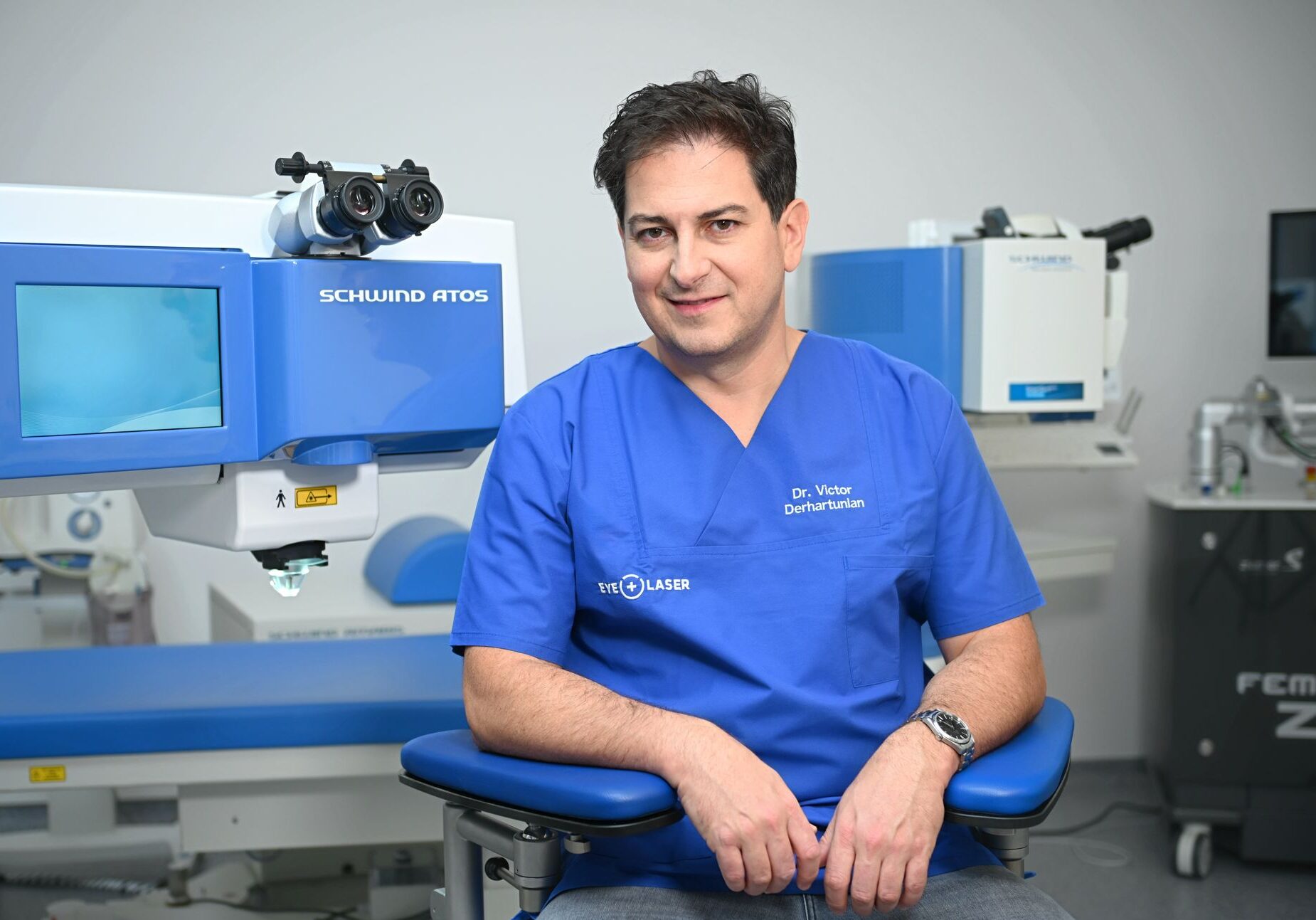
Dr Victor Derhartunian
  • Specialists in Corneal and Laser Surgery
  • State-of-the-Art Femtosecond Technology
  • Tailored Treatment Concepts
  • Care for International Patients
  • Central Location in the Heart of Vienna

✈️ EyeLaser Vienna regularly treats patients from Germany, Switzerland, Italy, and Eastern Europe.

Frequently Asked Questions (FAQ) about CAIRS in Vienna

What is the Main Advantage of CAIRS Made from Tissue over Plastic Rings?

The main advantage lies in the natural integration of the donor tissue into your cornea, which completely prevents an uncomfortable foreign body sensation. Due to this high biocompatibility, there is a significantly lower risk of inflammation or rejection, as the cornea does not recognize the ring as a foreign material. This enables permanent and more stable vision improvement without the disadvantages of conventional plastic implants.

Where does the donor tissue come from?

The donor tissue comes exclusively from certified eye banks, which are subject to the highest quality and safety standards in Austria and the EU. Each tissue preparation is carefully tested and processed according to strict ethical guidelines to exclude the transmission of any diseases. Only flawless material is used for implantation at EyeLaser to ensure your safety.

Is the CAIRS Operation Painful?

The CAIRS operation itself is completely painless thanks to local anesthesia with special eye drops. After the procedure, however, there may be a slight foreign body sensation for a short time, usually only a few hours, comparable to an eyelash in the eye. This feeling is normal and quickly subsides; pain-relieving drops are provided to help.

Does the health insurance company cover the costs?

Cost coverage depends on your individual insurance plan and the medical necessity of the procedure. While statutory health insurance (e.g., ÖGK) in Austria often does not fully cover this method, private supplementary insurances often contribute to the treatment costs. It is advisable to obtain a detailed cost estimate from EyeLaser beforehand and submit it to your insurance for clarification.

How Quickly Will My Vision Improve after the Procedure?

First noticeable improvements in vision usually occur after just 1–2 days, once the initial swelling has subsided. However, the full and final stabilization of visual acuity takes a little more time and is usually achieved after a few weeks up to two months, as the cornea first needs to adapt to the new curvature. During this time, it is important to adhere to follow-up appointments at EyeLaser.

Can CAIRS be Removed?

Technically, removal of the CAIRS segments is possible at any time, as the procedure is reversible, but this is only medically necessary in the rarest of cases. Since the transplant tissue integrates so well into the natural structure of the cornea, the solution is designed to be permanent, and complications requiring removal are extremely unlikely. Removal would only be considered in very specific, postoperative necessities.

Is CAIRS Combined with Crosslinking?

The combination of CAIRS with Crosslinking (CXL) is a very commonly used and established standard in keratoconus treatment in Austria. CAIRS first reshapes the corneal structure and improves visual acuity, while crosslinking subsequently additionally strengthens the collagen fibers and stops keratoconus. This synergistic treatment thus offers the best chances for long-term stability and optimal visual results.

What is the Risk of Rejection?

The risk of a classic rejection reaction, as known from other transplants, is extremely low and hardly relevant with CAIRS. This is because the cornea contains no blood vessels, and thus the body’s immune system can only reach it to a very limited extent. The donor tissue is also carefully prepared and very well accepted by the body.

Do I Need to Stay Overnight?

No, the CAIRS operation is an outpatient procedure, so you can go home on the same day. However, since you must not drive yourself and your vision may be impaired for a few hours after the surgery, an escort for the journey home from the EyeLaser clinic in Vienna or Linz is absolutely necessary. Please plan the entire stay, including preparation and follow-up, carefully.

Will I Still Need Glasses Afterwards?

The goal of CAIRS treatment is a significant reduction in refractive errors, so that many patients no longer need glasses in everyday life. However, it is possible that you may still need light glasses for specific activities such as reading small print (presbyopia) or driving at night. The need for visual aids will significantly decrease compared to the condition before the operation.

How Do I Prepare for the Surgery?

The most important preparation is the timely discontinuation of your contact lenses, as these temporarily deform the corneal surface. The EyeLaser team will inform you of the exact deadlines (typically 2–4 weeks beforehand) during your personal preliminary consultation, as these depend on your type of lens. Furthermore, you will receive detailed instructions on the use of eye drops for surgical preparation.

What if I Am not Suitable for CAIRS?

Should preliminary examinations reveal that CAIRS is not the best option for your eyes, there are various proven alternatives in ophthalmology. These include crosslinking alone for stabilizing keratoconus, the fitting of special, form-stable contact lenses for optimal correction, or, in advanced cases, a partial corneal transplant (DMEK/DALK). The EyeLaser team will advise you comprehensively on the best treatment option for you.