Stopping deformation of the cornea, regularizing the cornea & correcting residual vision defects with ICL or Trans-PRK

For over 20 years, crosslinking has offered patients a safe, effective and gentle treatment that stops curvature and allows the cornea to stabilize through new collagen connections.

What is crosslinking?

Crosslinking is used in refractive surgery to stabilize the cornea. This is necessary, for example, if the patient suffers from keratoconus or keratoderma (pellucid marginal degeneration of the cornea).

In contrast to a complex and risky corneal transplant, crosslinking (clx) can trigger a chemical reaction through the use of vitamin B2 (riboflavin) and UV light, which stimulates collagen crosslinking in the cornea. This strengthens and stabilizes the cornea. Protrusion can be prevented, slowed down or even easily reversed.

Find out more about the eye disease “keratoconus”, the symptoms, causes and treatment options:

When and for whom is crosslinking suitable for keratoconus?

The most important prerequisite for promising and safe treatment with crosslinking is sufficient corneal thickness:

  • At least 400 µm corneal thickness
  • Can also be used for
    • Keratotorus (pellucid marginal degeneration (PMD))
    • Keratoglobus
    • Corneal ectasia after LASIK

This value is determined during your preliminary examination. If the corneal thickness is lower, the UV radiation cannot be sufficiently absorbed and there is a risk of damage to the endothelial cells on the inside of the cornea, which are responsible for pumping out water.

In addition, the curvature value should be less than 55 diopters amount. The Chances of success decrease with

  • Scarring of the cornea
  • increasing age
  • Eye infections
  • existing disorder of the epithelium
  • Pregnancy

Free cxl suitability test & non-binding preliminary examination:

Do you recognize the symptoms described above in yourself or your loved ones or do you already know that you have keratoconus? At EyeLaser Vienna and Linz, we can use state-of-the-art diagnostics to detect keratoconus and check whether you are suitable for crosslinking.

As part of your free suitability test, a measurement of the corneal thickness (pachymetry) and a surface measurement (topography) will be carried out. You will then have certainty and can decide on the basis of medical facts to act quickly and correctly!

Aptitude test

After your free aptitude test with world-renowned eye surgeons, you will know whether you have keratoconus and whether crosslinking is promising for you:

Arrange an aptitude test

Preliminary examination

During your aptitude test in conjunction with a non-binding, holistic preliminary examination (200 euros)*, we will develop an individual treatment plan for you:

Arrange a preliminary examination

*If you opt for treatment at EyeLaser, these costs will be deducted from the laser eye surgery costs.

Advantages of crosslinking for corneal bulging

How crosslinking strengthens the corneal surface through collagen crosslinking:

Crosslinking for keratoconus and similar corneal diseases is gentle on the tissue, as the eye does not have to be “opened”, takes a maximum of two hours in total and can be performed on an outpatient basis at EyeLaser in Vienna or Linz.

To ensure you don’t feel any pain during the treatment, your eyes are numbed with eye drops. The top layer of the cornea is then removed, allowing the vitamin B2 (riboflavin) to penetrate deeper into the tissue and preventing the UV light from being filtered as strongly. The riboflavin ensures that the UV-A radiation to which the eye is subsequently exposed can be sufficiently absorbed. During crosslinking, the eye is irradiated with UV radiation for half an hour after the administration of vitamin B2.

The intensity of the radiation is regulated so that no tissue damage occurs, while still stimulating the formation of new cross-links in the cornea. These networks provide the necessary stability and prevent further bulging of the cornea. The corneal curvature is significantly more even afterwards, so that the visual defect can be corrected by wearing glasses or a refractive treatment (e.g. lens implantation or Trans-PRK).

epi-off or epi-on crosslinking: Which is right for you?

There are currently two methods for UV crosslinking. At EyeLaser Vienna and Linz, we mostly use the classic epi-off crosslinkingas the success rate is significantly higher.

We decide on your individual case which variant is promising and optimally suited for you. In the case of particularly mild keratoconus, the epi-on procedure may well be an option. In principle, however, we see the increased effectiveness (epi-off) as a reason to accept the slight discomfort – e.g. burning sensation – in the days following treatment, but the certainty that the cornea is sufficiently stabilized.

1. epi-off Crosslinking:

The upper corneal layer is scraped off, as it significantly impairs UV absorption. This allows the vitamin B2 to penetrate much deeper into the cornea and reach the stroma. With correct follow-up care and treatment, the risk of infection from the scraping is vanishingly small.

Penetration depth of vitamin B2: 400 µm

Success rate: over 95 percent

Treatment procedure: Prevent progression and achieve clear vision without glasses in two steps

Keratoconus, PMD or keratoglobus can have a lasting negative impact on your quality of life and get worse and worse if you don’t treat it. At EyeLaser Vienna and Linz, we have already helped thousands of patients to stop the corneal bulge and sometimes even correct all visual defects in a follow-up treatment.

What happens if you opt for crosslinking:

Step 1: Stop the protrusion with vitamin B2 & UV radiation

1. preliminary investigation

To begin with, the abnormal corneal curvature must be diagnosed. At EyeLaser, we use state-of-the-art diagnostic equipment to precisely measure and record your corneal thickness, corneal structure and other parameters. This measurement data is also relevant for the subsequent crosslinking treatment. We use different methods for this. Progressive keratoconus, for example, is diagnosed by the change in corneal refractive power over a certain period of time.

As soon as the preliminary examinations have been completed, we will advise you on the most promising treatment and, if desired, draw up your individual treatment plan including all the documents you need for your health insurance company.

2. treatment

The actual treatment takes around 60-90 minutes – you should allow two hours for pre- and post-treatment care. The eye is anesthetized with eye drops so that you do not feel any pain.

The top layer of the cornea is removed mechanically so that the active ingredient riboflavin can penetrate deep enough into the cornea and not filter out too much of the UV-A radiation.

A small amount of vitamin B2 is now applied / dripped every three minutes for half an hour.

To stimulate the metabolism, the reconnection of the fibers and the formation of collagen compounds, your eye is then irradiated by a UV lamp for 30 minutes – the riboflavin continues to be dripped during this time.

3. aftercare

The cornea needs time to heal after crosslinking. During this phase, slight pain and other mild side effects (e.g. red eyes, itching, burning, sensitivity to light, dryness) cannot be avoided. To alleviate these symptoms and avoid infections, you will receive a drop schedule for anti-inflammatory eye drops with an antibiotic agent and tear substitutes to keep the eyes moist. In the first few days after crosslinking, your eye is protected by a hard contact lens (bandage lens).

  1. Control: 3-4 days after crosslinking
  2. Control: 1 month after crosslinking
  3. Control: 6 months after crosslinking
  4. Completion: 12 months after crosslinking

If complications arise or you need our advice outside of the scheduled follow-up appointments, we are of course always happy to help.

In some cases, a slight clouding of the stroma occurs. However, this disappears by itself after a few months and hardly affects you in everyday life. Afterwards, the clarity of the cornea is restored.

As soon as healing is complete, you can use soft contact lenses again. If these do not fit, wait at least 3 months after the treatment before refitting. Only then will the shape of your corneal tissue be stable enough for the lenses to be made to fit permanently.

Frau, die Augentropfen in die Augen spritzt

Step 2: Lens implantation or trans-PRK to improve the refractive error

With a follow-up treatment you can independent of wearing glasses or contact lenses make. The fact that the cornea is significantly more stable after crosslinking and the corneal curvature is more regular means that vision correction is much easier. for some patients possible – at the earliest six months after the procedure.

Crosslinking costs:

Aptitude test
0 €

Find out whether lens surgery is possible for you. Perfect for patients who are considering having their vision corrected.

Crosslinking
1.900 €
  • Price per eye
  • ab 29 Euro / Monat*
  • Stopping the cornea from bulging
  • Regularize cornea through follow-up treatment
  • Extremely safe and effective (95 percent)

Financing options: Pay for crosslinking in small installments

No one should have to suffer from the effects and consequences of keratoconus. That is why we offer attractive financing options at EyeLaser Vienna and Linz. You do not necessarily have to pay the entire amount at once, but can significantly increase your quality of life with a small monthly installment.

Interest-free cross-linking financing over 6 months:

Cure your keratoconus without bureaucracy and without long-term credit commitments. Pay in six convenient monthly installments without having to add a cent of interest.

284 euros per month

Crosslinking financing for less than 29 euros per month over 5 years:

Together with our partner banks, we can offer you a five-year loan so that you only have to pay a small part of your budget each month.

29 euros per month*

* The term is five years. Effective annual interest rate: 6.6 percent. The prices refer to one eye.

What does lens implantation (optional) cost afterwards?

Trans-PRK 7D
1.700 €
  • from 33 euros / month
  • 1st generation of laser eye surgery
  • Without corneal incision & contact-free
  • Warranty available for 1, 3 or 5 years
ICL / IPCL Phake lens
3.500 €
  • from 68 Euro / month
  • Severe visual defects & laser eye surgery not possible
  • EVO/EVO+ VISIAN ICL
  • Astigmatismus Korrektur inklusive

We will discuss whether and which follow-up treatment can permanently correct your defective vision after crosslinking during your preliminary examination or after the crosslinking treatment at the Eye Laser Center Vienna / Linz.

Together we will find the best solution for your eyes that suits your visual impairment, your lifestyle and your budget.

Make an appointment

Healing process after crosslinking:

  • 3-5 days: Healing of the scraped corneal surface
  • 1 week: Visual performance improves significantly
  • 4-6 weeks: Visual performance is back to “normal” or improved
  • 3-6 months: Slight clouding of the cornea disappears

After epi-off crosslinking (clx) in particular, the removed corneal layer must heal and regress. Therefore, after the procedure, a soft, protective Contact lens (bandage contact lens) until the top layer has healed again. This usually takes between three and five days. Until the healing is complete, you should return to your check-up appointments to ensure that there is no infection.

But even after the acute healing phase, you can come to our laser eye center in Vienna or Linz at any time – apart from the regular check-up appointments – in case of complications or uncertainties. We will take care of you!

Side effects of healing after crosslinking:

After treatment, many patients complain of pain, burning, watery and reddened eyes and a foreign body sensation. To alleviate this, EyeLaser will provide you with appropriate painkillers and/or eye drops.


Once the first phase of healing is complete, there are only mild symptoms such as a foreign body sensation or itchy eyes. Visual acuity increases until it is as it was before the treatment or even better after four to six weeks.

Cloudy cornea after crosslinking:

Sometimes after crosslinking there is a slight slight (!) clouding of the corneawhich, however, only slightly impairs vision, is normal and disappears again within three to a maximum of six months.

Crosslinking risks: Safe & effective for over 20 years – without complications

With a success rate of over 95 percent and a complication rate of well under 3 percent – including minor complications – crosslinking is considered to be extremely safe and low-risk for you as a patient.

It has been used worldwide since 2002 to stimulate the cross-linking of the cornea. Damage to the eyes caused by UV-A radiation is prevented by the precise determination of the harmless intensity.

There are hardly any side effects and there are no serious consequences, such as damage to the retina or lens have been documented. In over 97 percent of patients, there are no complications after crosslinking.

  • Risk of corneal infection (less than 1 percent)
  • Delayed, prolonged wound healing
  • Scarring (rare and treatable)

Your laser eye surgery specialists at the Eye Laser Center Austria

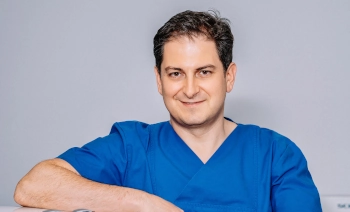
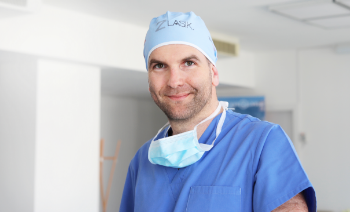
Austria’s most popular Femto-Lasik surgeons Dr. Victor Derhartunian FEBO & Dr. Paul Jirak FEBO in Vienna & Linz

Dr. Victor Derhartunian
Ophthalmologist, specialist in refractive surgery
FEBO

Having learned his craft from the two pioneers of laser surgery, Dr. Victor Derhartunian is one of the leading laser eye surgeons. He runs the practice in Vienna and can advise his patients in five languages.

Learn more
Dr. Paul Jirak
Ophthalmologist, specialist in refractive surgery
FEBO

Dr. Paul Jirak ist Mitbegründer eines der renommiertesten Zentren für Augenlaserchirurgie in Österreich und behandelt seit 2014 Patienten in Linz. Er ist spezialisiert auf Augenheilkunde, Optometrie, Augenchirurgie und Augenlasern.

Learn more
Assoc. Prof. Priv. Doz. Dr. Christina Leydolt
Ophthalmologist, specialist in artificial lenses and cataracts
FEBO

Dr. Leydolt is an ophthalmologist and specializes in cataract and lens surgery. She heads a research group with this focus, trains young surgeons and gives international lectures.

Learn more
Dr. Victor Derhartunian
Ophthalmologist, specialist in refractive surgery
FEBO

Having learned his craft from the two pioneers of laser surgery, Dr. Victor Derhartunian is one of the leading laser eye surgeons. He runs the practice in Vienna and can advise his patients in five languages.

Learn more
Dr. Paul Jirak
Ophthalmologist, specialist in refractive surgery
FEBO

Dr. Paul Jirak ist Mitbegründer eines der renommiertesten Zentren für Augenlaserchirurgie in Österreich und behandelt seit 2014 Patienten in Linz. Er ist spezialisiert auf Augenheilkunde, Optometrie, Augenchirurgie und Augenlasern.

Learn more
Assoc. Prof. Priv. Doz. Dr. Christina Leydolt
Ophthalmologist, specialist in artificial lenses and cataracts
FEBO

Dr. Leydolt is an ophthalmologist and specializes in cataract and lens surgery. She heads a research group with this focus, trains young surgeons and gives international lectures.

Learn more

Crosslinking for keratoconus, PMD & Co. : Questions and answers

Crosslinking is the most important treatment method for keratoconus to stop the progression of corneal protrusion. Here you can find out all about this proven therapy: how it works, who it is suitable for and what results you can expect.

4,9 von 5 – über 240 Google-Bewertungen für EyeLaser Wien & Linz