


Cataract surgery – premium lenses & LASER for clear vision from 55+
- Find out how this ultra-precise treatment can restore your vision and free you from your dependence on glasses.

Thanks to modern premium lenses and gentle LASER technology, cataract surgery can not only significantly improve blurred vision – the quality of life of many patients aged 55+ also increases noticeably, even with existing eye diseases.
Gain problem-free vision with our treatment protocol for exceptional eye surgery results

Not everyone is suitable for laser eye surgery. The first step is to find out whether your eyes are suitable for laser eye surgery. Give us a call in Vienna or Linz. You can also book an appointment online.

At Augenlaserzentrum Wien, we check your eyes and take the time to listen to your needs. Once we have found the best laser eye treatment for you, you will feel confident about your next steps.

After treatment in our state-of-the-art clinic, you will marvel at our craftsmanship and experience exceptional, natural vision – free from glasses and contact lenses.
Find out everything you need to know about cataract surgery
Cataracts are an age-related clouding of the lens of the eye and the most common eye disease of all. The lens grows throughout life, but can only become larger and thicker to a limited extent. As a result, the inside of the lens becomes increasingly dense, which leads to clouding. Metabolic changes with age or even injuries also contribute to this.
This process occurs in everyone at some point in their lives. Cataracts usually begin to impair vision around the age of 60. The cataract becomes noticeable through a cloudy visual impression such as a gray haze, increased sensitivity to glare and rapidly changing spectacle strength.
Cataract surgery is the most common and most successful operation in eye surgery – 15 million operations are performed every year.
During cataract surgery, the cloudy lens is removed and replaced with an artificial lens (lens replacement). Existing visual defects such as short-sightedness or long-sightedness, astigmatism or presbyopia can also be corrected by using different lenses!
During a consultation, including a preliminary ophthalmological examination, we will examine your cataracts and inform you about the various treatment options and implants. The treatment of cataracts is generally covered by health insurance. At EyeLaser, we offer you not only many years of surgical experience, but also the latest lens implants and comprehensive advice – all without having to wait months. We can even make you completely independent of glasses if you are suitable.
All about the OR
The only treatment option for cataracts is surgery. To date, there is no effective alternative and no medication that could alleviate the impairment caused by cataracts or halt their progression.
This procedure, which usually takes less than 15 minutes, is usually performed under drip anesthesia – only eye drops are required to anesthetize the eye.
Step 1: First, the surgeon removes the cloudy lens through a tiny incision
Step 2: The surgeon then implants a precisely calculated artificial lens in the same place.
Nowadays, thanks to the latest lens technology, there are numerous options for adjusting the spectacle prescription to individual requirements after surgery.
In order to achieve the best possible result, a comprehensive and precise examination and measurement of the eye, as well as an in-depth consultation, are of great importance. We are happy to take the time to explain all possible variants and options to you and compare them with your wishes and ideas.
You can enjoy your “new eyes” just a few days after the operation, even if a certain adjustment phase and slight fluctuations in visual acuity are quite normal during the first few weeks. During this time, eye drops help with care and controlled wound healing.
Despite precise measurement and calculation, in rare cases wound healing can lead to a deviation from the desired result. But don’t worry, even then the result can be perfected with a short corrective procedure.
Cataracts – how to notice them
At first, often in the dark, something like a clouding is noticeable, and one is sometimes more sensitive to light than is usually the case. Patients often say that they think they are looking through dirty glasses or a dirty window pane. However, it is also clear that everyone feels differently – and every manifestation is different. The clouding of the lens progresses rapidly for some, but very slowly for others.
The lens often becomes so cloudy that myopia increases significantly or you can hardly see anything with glasses. However, the opposite can also be the case: without glasses, vision is suddenly better than with.
Either way, you should see an ophthalmologist as soon as possible. There, the eye will be examined in detail and an eye test carried out. Using a so-called slit lamp, it is possible to determine whether a cataract is present or whether other causes are responsible for the symptoms. This usually involves dilating the pupil.
Cataract surgery is one of the safest and most successful procedures in medicine. The doctor and patient decide together when the time is right for the operation, depending on the intensity of the symptoms.
The operation
The preliminary investigation
In order to ensure maximum safety and precision during the operation, a comprehensive and precise preliminary examination is of great importance. As part of this preliminary examination, numerous measurements and examinations are carried out that are necessary for the precise fitting of the artificial lens.
The pupil will also be dilated with medication. Therefore, please note that you must not drive for 3 hours after this examination. Ideally, you should be collected by someone you trust. A medical report from your GP is very helpful if you have to take medication regularly or if other important treatments are required on a regular basis.
The day of the operation
On the day of the procedure, please have breakfast as normal and take your medication as usual. However, please refrain from wearing make-up, face creams, perfume or eau de toilette.
The local anesthetic
The eye is usually anesthetized with eye drops during the operation. This minimizes the stress of the operation and the effect wears off quickly after the procedure. A low-dose sedative can also be used in addition. In rare cases, an injection next to the eye or a general anaesthetic can also be administered if absolute immobilization of the eye is required.
Preparation
After dilating the pupil with drops or inserting a tablet into the palpebral fissure, the patient is led into the operating theater wearing special surgical clothing (gown, cap, etc.).
The patient is placed on the operating table, then the operating area is neatly covered with sterile drapes and foil. A sufficient oxygen supply is of course guaranteed, but this is monitored by means of a pulse oximeter during the entire stay in the operating theater.
An eyelid holder is then inserted to keep the eye open during the procedure. To prevent the surface of the eye from drying out, the eye is permanently moistened with a special liquid.
The OP
The operation is performed under a high-resolution microscope. A tiny incision is made in the eye with a steady hand. The lens capsule, which encloses the cortex and the nucleus like a shell, is opened through this incision. The cloudy lens can now be broken up and suctioned out using ultrasound waves. What remains is the empty lens capsule – the so-called capsular bag.
The tightly rolled-up lens is now inserted into the eye through the small incision, where it can slowly unfold in the capsular bag.
Finally, the wounds are sealed and an antibiotic is injected into the anterior chamber to prevent infection.
The eye is then treated with an eye cup.
Can there be complications?
Cataract surgery is one of the safest and most successful procedures in medicine. However, surgery always involves risks. Up to 95 percent of all operations of this type go without incident, with complications occurring in the remaining cases. However, these are complications that can be treated directly by the doctor and no problems remain.
Below are some of these possible complications and what is being done about them:
After the procedure: what happens next
During the first night after the operation, the eye is protected from involuntary contact by a bandage and an eye shield. In the first few days, the eye may often water and scratch a little, and sensitivity to light and glare is not uncommon. Vision is still somewhat blurred in the first few days and visual acuity fluctuates. After a week, the symptoms have usually largely subsided and the final result is achieved after around 8 to 12 weeks.
During this time, there are a few things to consider that we would like to mention here. Some only concern the initial period after the operation, others need to be taken into account in the longer term:
As a rule, vision recovers relatively quickly within a few days after the operation. However, fluctuations in visual acuity and moderate discomfort such as occasional foreign body sensation or watering of the eyes may persist for some time. If the result still deviates from the desired goal due to wound healing, correction with temporary glasses may be advisable in rare cases in the meantime.
In the event of an emergency
If – especially in the first 14 days after the operation – you suddenly experience severe pain or an abrupt deterioration in your vision, please contact an ophthalmologist immediately or visit the emergency outpatient clinic. Even if you suddenly see flashes of light and “black clouds” in one eye – immediate clarification is required. If in doubt, it’s better to check once too often than too little – so don’t hesitate if necessary.
The so-called secondary cataract
The artificial lens is usually implanted in the so-called capsular bag, which surrounds the lens like a natural sheath. As the wound heals, the tissue first shrinks and then sometimes becomes cloudy. This manifests itself in a slow deterioration in vision and blurred vision. This so-called “secondary cataract” can occur in some patients after just a few weeks, in others only after many years. But – no need to worry! With a short and painless laser treatment, the secondary cataract can be successfully removed within a few minutes. Recurrence after laser treatment is virtually impossible.
Select the option that best suits you to find your optimal treatment method

Haben Ihre Augen Schwierigkeiten, mit Ihrem Lebensstil Schritt zu halten? Vielleicht haben Sie eine Brille für jede Gelegenheit, aber wenn Sie sie brauchen, ist sie entweder kaputt oder verschwunden?
Discover the best treatment that will free you from the discomfort and hassle of reading glasses…

If your vision is cloudy or blurry (even with glasses), if colors appear dull or faded, or if you have increasing difficulty seeing at night, it’s likely you have a cataract.
Discover the best treatment to restore your visual acuity (AND eliminate the need for glasses!)

After the age of 55, most of us have reading glasses and find them annoying! Independence from reading glasses is possible, but not all eyes can be treated. Book an appointment to find out if you are suitable for presbyopia correction:
Make an appointmentWir sind stolz darauf, mit erstklassigen privaten Krankenversicherungen zusammenzuarbeiten






The patient is given a local anesthetic in the form of eye drops or an injection next to the eye.

The first step is to make a small incision at the edge of the cornea, which allows the natural lens to liquefy and be aspirated.

Instead of the removed lens, the multifocal lens is now inserted in this place. As the name suggests, the inserted multifocal lenses enable simultaneous and sharp imaging of different distances. This means that patients can see clearly at near and far distances again after the procedure.

After the procedure, the eye is protected from environmental influences such as dirt and dust with an eye patch so that the incision can heal well over the next few days.

Everything here (even the coffee) is done with the same care.

The right clinic is not too cheap, too “chain” or too costly. The right clinic is precisely right.

Before every procedure, a thorough preliminary examination clarifies whether and how it makes sense for your eyes.
Get a comprehensive overview of everything you need to know to restore your sight
You can find more information about cataract surgery under the following links
Dr. Victor Derhartunian, FEBO, FWCRS & Dr. Paul Jirak, FEBO, in Vienna & Linz – recognised by patients with the DocFinder Patients’ Choice Award
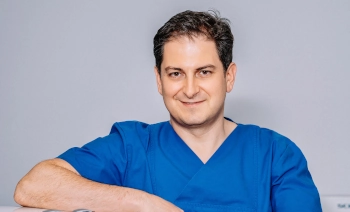
Dr. Victor Derhartunian, FEBO, FWCRS, heads EyeLaser Vienna and has performed more than 25,000 laser procedures. He advises patients in German, English, Polish and French.
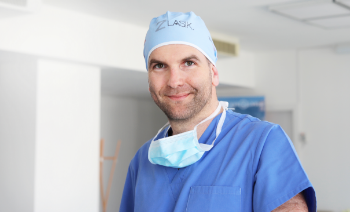
Dr. Paul Jirak, FEBO, is a specialist in ophthalmology and co-founder of a laser eye surgery centre in Austria. He has been treating patients in Linz since 2014. His focus is eye surgery and laser eye surgery.

Dr. Leydolt is an ophthalmologist and specializes in cataract and lens surgery. She heads a research group with this focus, trains young surgeons and gives international lectures.
Cataracts are a common eye disease that severely impairs vision. Here you can find out everything you need to know about cataract surgery: when it is necessary, how it is performed, what types of lenses are available and what the treatment costs.
Cataract surgery is a surgical procedure that is used to treat a cataract. This is when the lens of the eye is clouded. The cloudy lens is destroyed during the procedure and replaced with a special artificial lens. The clouding disappears and you can see clearly again. As cataracts cannot be cured in any other way, cataract surgery is always necessary in order to avoid a lasting loss of vision and quality of life.
Everything begins with a preliminary examination. On the day of the actual operation, the eye is anaesthetized, making the procedure painless. The natural lens is shredded and aspirated through a tiny incision. The artificial lens (monofocal or multifocal) is then inserted and adjusted. The procedure usually takes between 15 and 20 minutes. You can then go home, followed by two follow-up appointments to ensure and monitor the healing process.
There are three types of artificial lenses that can typically be used during cataract surgery. In addition to curing cataracts, all lenses are able to correct existing visual defects such as short-sightedness, long-sightedness and even astigmatism:
It usually takes between four and six weeks for healing to be complete. However, the first improvement in vision occurs after just a few hours or days. The brain needs some time to get used to the “new lens”. Two follow-up appointments are scheduled and you will receive appropriate medication to ensure that the healing process is as quick and complication-free as possible.
The cost of cataract surgery varies depending on the provider, lens type and location. At EyeLaser, lens replacement costs €3,500 per eye, regardless of the lens type. Monofocal, toric, EDOF and multifocal lenses cost the same; there is no surcharge for premium lenses. All services are included.
The statutory health insurance in Austria usually covers cataract surgery – but only with monofocal lenses. Premium lenses usually have to be paid for by the patient. Exceptions are possible if you have private health insurance or supplementary insurance.
Almost everyone who comes to us has the same questions in mind and does not always dare to ask them. Here are the honest answers.
No. The eye is numbed with drops, with light sedation on request. The operation takes about 15 to 20 minutes per eye; you feel pressure and light, no pain. Afterwards a scratchy feeling for a few hours that quickly eases with the drops.
Neither. We operate when the clouding disturbs your everyday life, not by age. Even at 90 the operation is routine, and someone who comes at 55 because of reading glasses gets the same procedure as a lens exchange.
Cataract surgery is one of the most frequent and safest procedures in medicine. The serious risks are rare: infection (sterile theatre, antibiotic), swelling of the central retina (preventable with drops), retinal detachment in highly short-sighted patients. We check the retina beforehand and see you again the next day.
The measurements decide, not the price: with us every lens costs the same. Monofocal for maximum sharpness at one distance, EDOF for distance and screen with few halos, multifocal for extensive freedom from glasses, toric for astigmatism. We discuss the trade-off of each lens openly.
No. The artificial lens does not cloud and does not age. What is possible later is a secondary cataract, a clouding of the lens capsule; it is cleared painlessly with the YAG laser in a few minutes, as an outpatient.
You don’t have to today. The first step is a preliminary examination with the chief surgeon, without obligation. Only the measurements show whether and when an operation makes sense. After that you have as much time to think as you need. A cataract is not an emergency; it worsens slowly.
We answer further questions in the FAQ below or in person at the suitability check.
„From the very first moment I felt in the best hands with Dr. Derhartunian. The whole team is incredibly friendly, well organised and really takes time for every patient.”
„I was looked after excellently and kindly by the EyeLaser team and decided on ICL lens surgery as a result. You are given all the information you need for the operation and for the time afterwards.”
You now know the procedure. The condition, the lens types, the secondary cataract and the prices: