Basics

What are EDOF lenses, and how do they work?

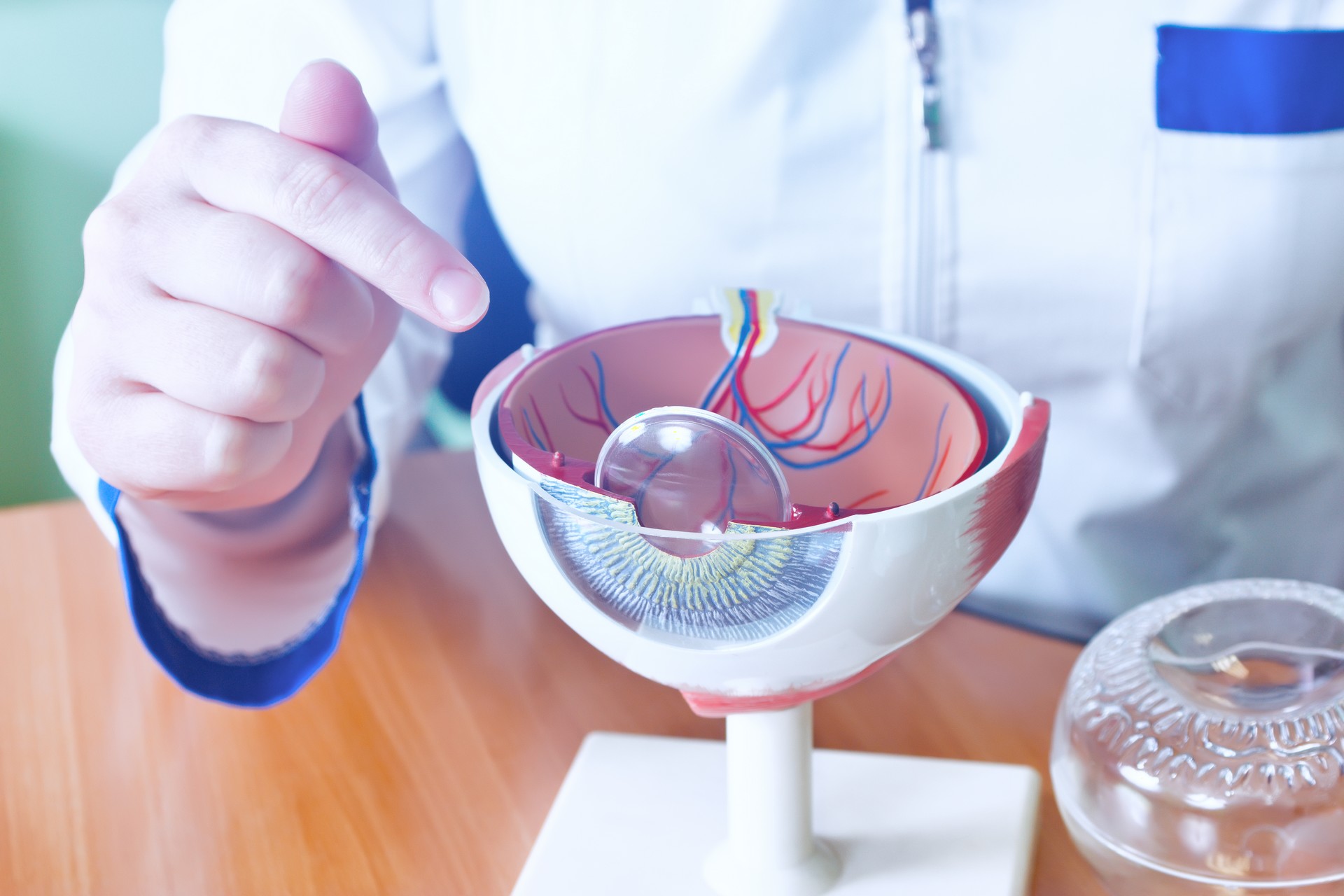
Person in a white coat pointing at a cross-section model of the eye
In brief

What
EDOF lenses (Extended Depth of Focus) give a continuous range of sharpness from distance to the screen, with markedly fewer halos than multifocal lenses.
For whom
Lots of screen work, driving including at night, glare-sensitive; a light pair of reading glasses for small print is acceptable.
Duration
15 to 20 minutes per eye, often a clear improvement by the next day.
Price
€3,500 per eye, fixed price for every lens type (monofocal, toric, EDOF, multifocal), incl. follow-up checks under the quality scheme. From €68/month.
Not suitable
Anyone who wants full near vision without any glasses (then trifocal), untreated eye disease.

EDOF stands for extended depth of focus. Instead of fixed focal points (as with multifocal or trifocal lenses), the optics create a continuous zone of sharpness from distance to the intermediate range (about 60 to 90 cm).

Advantage: a very natural visual impression, calm night vision (tendentially fewer halos) and a stable computer range. Ideal for everyday life, work and driving.

One picture to remember it by: like a modern autofocus that keeps not just one point but a whole range in focus.


Suitability

Who are EDOF lenses ideal for?

Smiling woman at a car window, behind her a man at the wheel giving a thumbs-up

EDOF lenses are a particularly good fit if you …

  • use a computer, laptop or tablet a lot,
  • drive for work or privately (including at night) and give priority to contrast and night comfort,
  • lead an active life (sport, outdoors) and want brilliant distance and intermediate vision,
  • are sensitive to glare and want to keep optical side effects to a minimum,
  • accept that for very small print at close range a light pair of reading glasses may occasionally be useful.

At EyeLaser Vienna we check your anatomy, visual habits and goals at the preliminary examination and choose between EDOF and (toric) alternatives individually.

Procedure

How does EDOF treatment in Vienna work?

Consultation and suitability check

Medical history, visual profile (computer, night driving, sport), your wishes

Precision diagnostics

Exact measurement, then the decision: EDOF or an alternative (toric or “blended vision” where appropriate)

Outpatient procedure (about 15 min per eye)

Under anaesthetic eye drops, micro-invasive, structured workflow

Aftercare and fine-tuning

Check-ups in Vienna; quick return to everyday life and work, touch-up option for small residual errors (depending on cornea and overall findings)

Prices & services

What does an EDOF lens cost in Vienna?

Transparent and binding, no hidden costs, no surprises.

FIXED PRICE

Lens surgery including the EDOF lens
€3,500 per eye
Monofocal, monofocal-plus, toric, EDOF or multifocal: the price is the same. Which lens goes into your eye is decided by the measurements, not by your budget.
Included in the fixed price
✓Care package after the treatment: you take your eye drops for the first days home with you directly from us.
✓Diagnostics and treatment planning: you pay for the entire clinical process, not for the material
✓The procedure: performed by an experienced specialist
✓Structured follow-up checks: according to our quality assurance scheme
✓24/7 emergency availability: you receive the surgeon’s personal mobile number
✓Tax-deductible in Austria: as an extraordinary expense
Cost components: EDOF lens at EyeLaser Vienna, as of 2026.
Service Amount
Free suitability test (15 min.) €0
Lens surgery including the lens, per eye: any lens type €3,500

How does healing progress after an EDOF lens?

Day 1Follow-up check at the clinic. Most people already see well enough for everyday tasks; short spells of screen work are possible.
Week 1Do not rub the eye, no heavy lifting, no swimming pool and no sauna. Drops according to the schedule. You take the starter package home with you.
Weeks 2 to 4Visual acuity stabilises. The second eye follows in this phase if both are being treated.
Months 2 to 3Neuroadaptation: the brain gets used to the continuous zone of sharpness. With an EDOF lens this phase is usually less noticeable than with a trifocal lens.

Will I still need reading glasses with an EDOF lens?

For everyday life usually not: distance, dashboard, price tags and screens are covered. For very small print in poor light, the package insert, the small print in a contract, many patients still reach for a weak pair of reading glasses.

That is not a shortcoming but the deliberate design of this lens: it spreads light across a continuous range instead of three fixed points. The price for that is the last centimetre of near vision. The gain is noticeably fewer rings of light at night. Anyone who wants to be completely rid of reading glasses is better served by a trifocal lens, at the same price.

When can I drive again?

Usually after a few days, as soon as your visual acuity meets the legal requirements. We confirm this at the follow-up check. Frequent drivers in particular benefit from the EDOF lens, because halos and glare are weaker than with multifocal designs.

Safety

How safe are EDOF lenses, and what results are realistic?

Smiling woman with blue eyes and windswept hair looking at the camera
✓Fast functional recovery: often a clear improvement as early as the next day.
✓Neuroadaptation optimises contrast and night vision in the first weeks.
iResidual errors: fine-tuning if needed, for example a laser touch-up, after conservative assessment.
Hygiene and standards: structured surgical protocols, validated processes and clear emergency contact channels.

Comparison

EDOF, trifocal or monofocal: what is the difference?

Comparison: EDOF · trifocal · monofocal (standard)
Criterion EDOF Trifocal Monofocal (standard)
Near good to very good (everyday life, menus, labels); reading glasses possibly for tiny print very strong (often complete near independence) reading glasses needed
Intermediate (computer, 60 to 80 cm) very strong very strong moderate
Distance very good very good very good
Halos / glare tendentially fewer possible at first, usually decreasing minimal
Visual impression very natural, broad depth of field 3 defined distances clear at one distance
Independence from glasses high in everyday life; glasses possibly for tiny print very high at all distances low

In brief

EDOF compared with a standard monofocal lens

Comparison: EDOF (e.g. Vivity, Eyhance) · standard monofocal
Feature EDOF (e.g. Vivity, Eyhance) Standard monofocal
Distance vision excellent, brilliant good
Intermediate (computer) excellent, seamless ❌ computer glasses needed
Near (reading) functionally good; reading aid possibly for small print ❌ always reading glasses
Night vision / contrast very good, few halos very good, no halos
Visual impression natural, fluid only one sharp range
Independence from glasses high everyday independence only for distance

Your advantages

Why EyeLaser Vienna?

Close-up of a blue eye with a clearly visible iris
  • Surgeon-led and personal: information, planning and aftercare with Dr. Victor Derhartunian, FEBO, FWCRS.
  • High-end diagnostics: topography, aberrometry, biometry as the basis for a tailor-made lens choice (including toric EDOF for astigmatism).
  • Transparency and safety: realistic goal setting, clear management of expectations and side effects, structured aftercare in Vienna.
  • Central location: Opernring 1, 1010 Vienna, excellent public transport links (U1/U2/U4 Karlsplatz, tram on the Ring).

Costs

Costs & financing

Woman writing on a clipboard next to the question “Which laser eye surgery method?”
✓€3,500 per eye, for every lens type. With us an EDOF lens costs exactly the same as a monofocal lens. There is no surcharge for the “better” lens.
iYou pay for the clinical process, not for the lens: diagnostics, calculation and selection of the lens, surgery and aftercare. Whether an EDOF lens is suitable for your eye is decided by the measurements, not by the price.
✓Payment in instalments possible: we advise you individually.
iHealth insurance: for a purely refractive motivation there is usually no insurance benefit. With a medical indication such as a cataract, the Austrian public insurance (ÖGK) pays for the operation with a standard lens in a public hospital, but without free choice of surgeon. With us you are a private patient and pay one all-inclusive price; nothing is added on top of an insurance benefit.
Yes, I would like a free suitability analysis!

Medical perspective

A word from Dr. Derhartunian

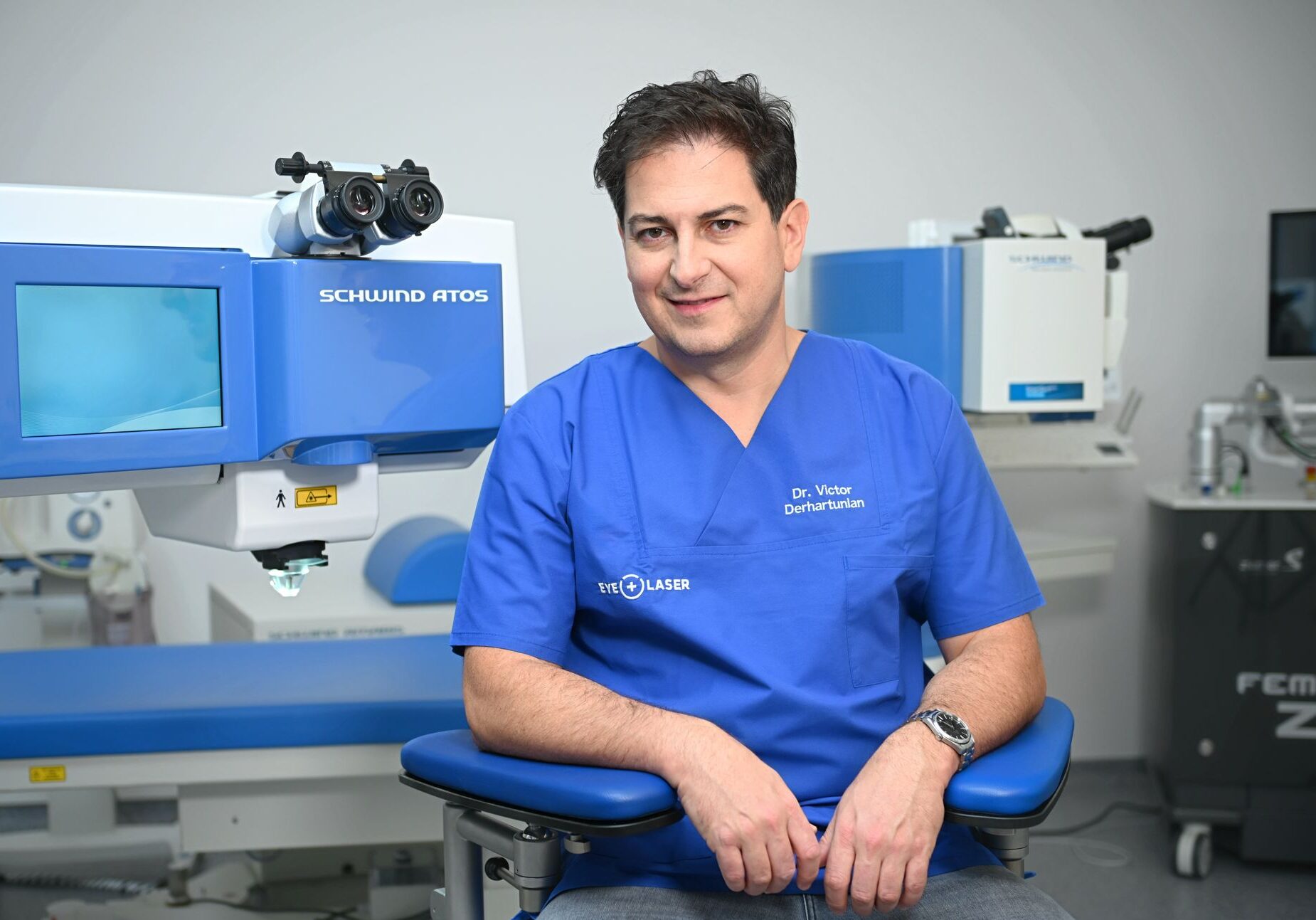
Dr. Victor Derhartunian in blue scrubs in front of the SCHWIND ATOS laser
Dr. Victor Derhartunian, FEBO, FWCRS“EDOF closes the gap between monofocal and trifocal. Anyone who gives priority to visual quality and night comfort and wants to be independent of glasses in everyday life, above all at the screen, often makes the best choice with EDOF.”
— Dr. med. univ. Victor Derhartunian, FEBO, FWCRS

What our patients say

“Relaxed at the screen, clear in the distance: exactly what I was looking for.”
“Pleasantly calm at night, sharp everywhere during the day. For tiny print I have a light pair of reading glasses. That doesn’t bother me.”

Explained in the video

Lens exchange for presbyopia with premium EDOF lenses, explained in the video (in German).

Are you ready for the decisive step?

Say goodbye to your reading glasses. The first step is a simple, no-obligation suitability assessment at our practice in Vienna.

Find out whether you can see life sharply again with your own eyes.

FAQ: EDOF in Vienna (15 detailed answers)

Am I suitable for EDOF?

Often yes, if you have presbyopia and give priority to intermediate distances (computer, cooking, conversation). We check the cornea, macula, tear film, pupil dynamics and your visual goals. For astigmatism, toric EDOF variants are available. In individual cases (for example pronounced maculopathy) we recommend alternatives.

Will I see completely without glasses with EDOF?

In everyday life usually yes (computer, car, shopping, TV). For very small print at close range, especially in poor light, a light pair of reading glasses may occasionally be useful. We discuss this clearly beforehand.

EDOF or trifocal: which suits me?

EDOF: broad zone of sharpness, tendentially fewer halos, strong in the computer range, very natural impression. Trifocal: maximum independence from glasses at all distances including reading small print; halos possible at first, usually decreasing. The decision follows your visual habits and priorities.

How quickly do I recover after the operation?

Many report clear, calm vision the next day. In the following weeks, neuroadaptation improves contrast and night vision step by step.

Does the procedure hurt?

The operation is performed as an outpatient and is painless under anaesthetic eye drops. Brief sensations of pressure or touch are possible. The procedure is standardised and explained in detail.

Are halos or glare possible with EDOF?

Yes, they are possible, but tendentially rarer and less pronounced than with classic multifocal designs. We choose the lens design to match your profile and accompany the adaptation closely.

What is vision like at the screen (home office, office)?

This is a strength of EDOF: the intermediate range (about 60 to 80 cm) is stable and comfortable. Many find laptop and computer vision very natural and relaxed.

Can I do sport, and from when?

Light activity usually after a few days. Swimming and sauna only after medical clearance at the follow-up visit. Contact and ball sports are assessed individually.

How long does an EDOF lens last?

The lens is designed for lifelong use. Because the natural lens is replaced, no cataract can develop later.

Do I need follow-up checks, and how do they work?

Yes. We plan a structured schedule of checks (for example day 1, week X, month X). If you have questions, you have direct contact channels to the team in Vienna.

What if small residual errors remain?

Depending on the cornea and overall findings, fine-tuning is possible (for example a laser touch-up). We plan conservatively and give priority to safety and quality.

Are there toric EDOF lenses?

Yes. For astigmatism, toric EDOF implants are available. Selection according to biometry, axis and stability.

Which manufacturers do you use?

We work with premium implants from leading manufacturers and choose the design according to your visual profile (near vision, night comfort, screen work). We discuss the details at your appointment.

Does health insurance cover the costs?

For a refractive motivation usually no. With a medical indication (for example cataract) the respective insurance rules apply. We support you in clarifying this.

How do I make an appointment, and how quickly can we start?

Online or by phone. The initial consultation is free of obligation and clarifies suitability, goals and the best lens option (EDOF, trifocal, monofocal, toric). Appointments are usually available at short notice.

What patients say

Reviews

4.9 out of 5 from 244 Google reviewsAll reviews on Google →Patient stories with video →

„From the very first moment I felt in the best hands with Dr. Derhartunian. The whole team is incredibly friendly, well organised and really takes time for every patient.”

Ralf P. · Google review (translated from German), July 2026

„I am very happy that I made this decision. One year after the operation everything is in perfect order. Getting up in the morning and not needing glasses any more is a completely different feeling.”

Oskar · Patient story after laser eye surgery, eyelaser.at
4,9 von 5 – über 240 Google-Bewertungen für EyeLaser Wien & Linz