Feel liberated with presbyopia correction

In this video, Dr. Paul Jirak explains the ultra-precise treatment you can use to get rid of your reading glasses

Enjoy more comfort and convenience with presbyopia correction

Presbyopia correction with uncompromising quality and precision in Vienna and Linz

Treatment options

Several procedures are available for the permanent correction of presbyopia.


All procedures can be performed on an outpatient basis and are completely painless for you.

Monovision or PresbyMax is suitable for people with presbyopia who can cope well with a “distance vision” and a “near vision” eye (this is simulated with contact lenses before the procedure).

Lens replacement is advisable if laser correction is not an option, you are over 50 years old and the natural lens is already slightly cloudy (incipient cataract).

In a refractive lens exchange, the natural lens is removed using computer-controlled ultrasound and replaced with a suitable artificial lens.

At EyeLaser, we use state-of-the-art multifocal lenses (trifocal lenses), EDOF lenses, which enable good near and far vision as well as covering the area between near and far vision (intermediate range) very well.

You can see very well again without glasses just a few days after the procedure

If there are still residual visual defects after lens replacement, these can usually be corrected very well with the help of laser correction.

Monovision

Monovision is used to treat presbyopia.


Each eye is subjected to a different refractive correction in order to prepare one eye for long-sightedness and the other for short-sightedness. In other words, a short-sighted eye and a long-sighted eye are artificially created!

The guide eye is corrected for distance vision, the other for near vision. Some patients tolerate this method perfectly, while others do not feel comfortable with it. Our job is to find out your preferences before the operation by simulating them with trial glasses or contact lenses. Ultimately, you decide whether monovision is suitable for you, depending on your profession and personal feelings.

This monovision can be performed in different ways: With the help of contact lenses, through laser eye treatment or through the implantation of intraocular lenses. As a rule, people between the ages of 35 and 65 are suitable for monovision – mainly those who are short-sighted and have already developed presbyopia.

In the best case scenario, monovision can achieve a high degree of independence from glasses or reading glasses. An average result is at least a reduction in visual impairment, which can be accompanied by a reduction in the diopter values for reading aids.

Monovision treatment steps:

The preparation

A contact lens trial adapted to your needs simulates the possible outcome of the treatment over one to two weeks. This allows you to assess in advance whether monovision is an option for you.

The treatment

In the case of monovision, you undergo femto-LASIK surgery, implantation of phakic lenses (ICL) or lens exchange. With both methods, your dominant eye is corrected for distance vision and your non-dominant eye for near vision.

PresbyMAX

PresbyMAX – modern laser eye method for the treatment of presbyopia

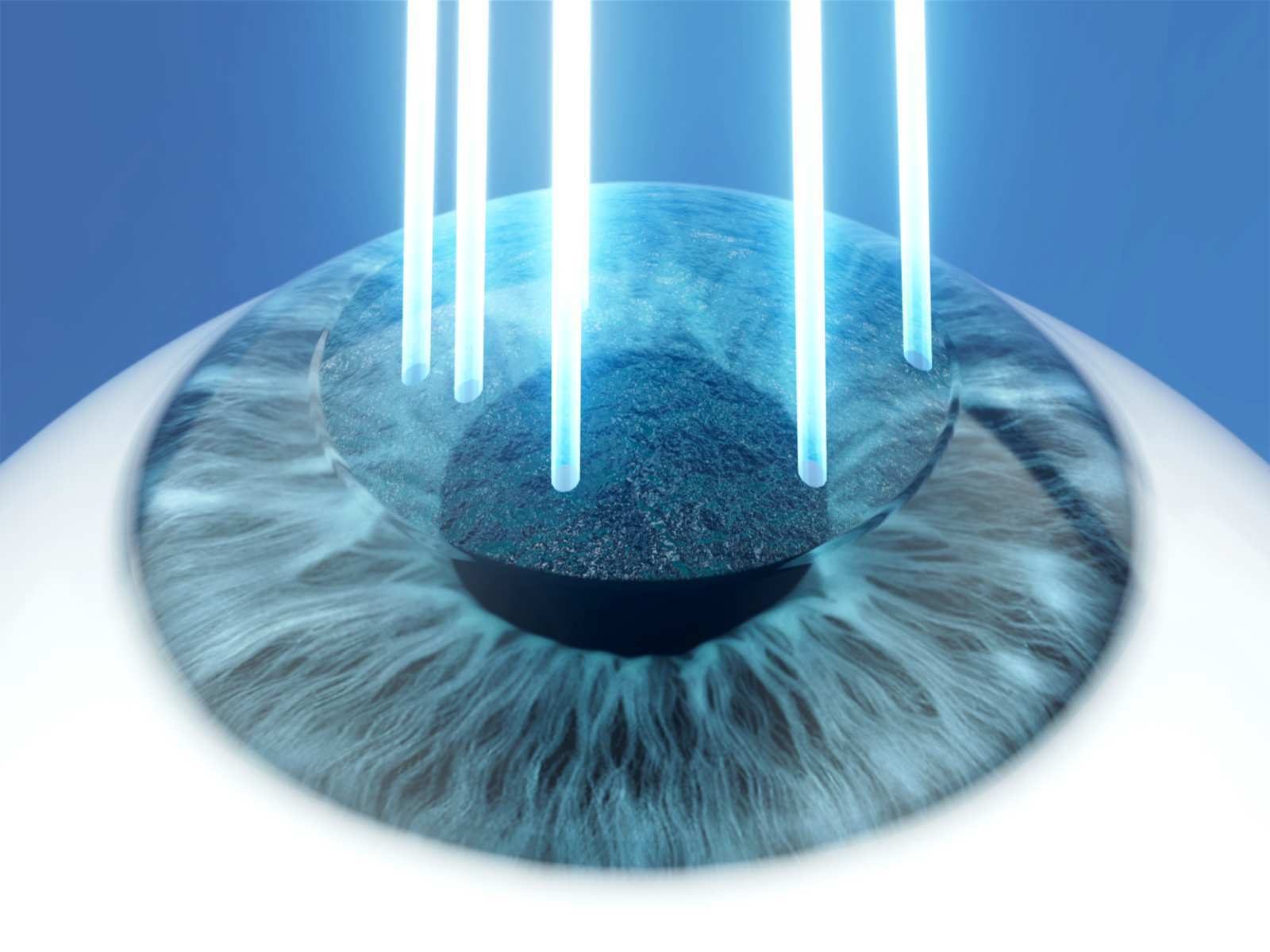
The PresbyMAX laser eye treatment only takes a few minutes and does not touch or replace the sensitive lens of the eye.

The modeling of the cornea, on the other hand, is achieved using fast laser pulses – precisely, gently and quickly.

The principle of the PresbyMAX method is similar to that of contact or intraocular lenses. The focal points of the eye are calculated precisely. For this purpose, the cornea is modeled for near vision (in the center) and far vision (towards the periphery). This results in good visual acuity at all distances – whether near or far.

There are various treatment options for the PresbyMAX method, which we will be happy to explain to you individually.

Refractive lens exchange

Refractive lens exchange (RLA) is mainly used for patients with cataracts, but also for people with severe short- or long-sightedness or presbyopia and astigmatism.

Through a small incision in the cornea, the natural lens (cloudy in cataracts) is removed and a lens made of compatible plastic (acrylate) is inserted instead.

We determine which method of lens surgery is most suitable for you in a personal consultation, including an ophthalmological examination by a specialist.

Free yourself from the burden of reading glasses if you are over 45

Frau bei einer gründlichen Augenuntersuchung vor der Laser-Augenkorrektur.

After the age of 40, most of us need reading glasses (even if we have never needed glasses before)! Independence from reading glasses is achievable, but not all eyes can be treated. Make an appointment to find out if you are suitable for presbyopia correction:

Make an appointment

Correcting presbyopia frees you from glasses and contact lenses

Find out everything you need to know about correcting presbyopia

Presbyopia correction technology

PresbyMAX technology

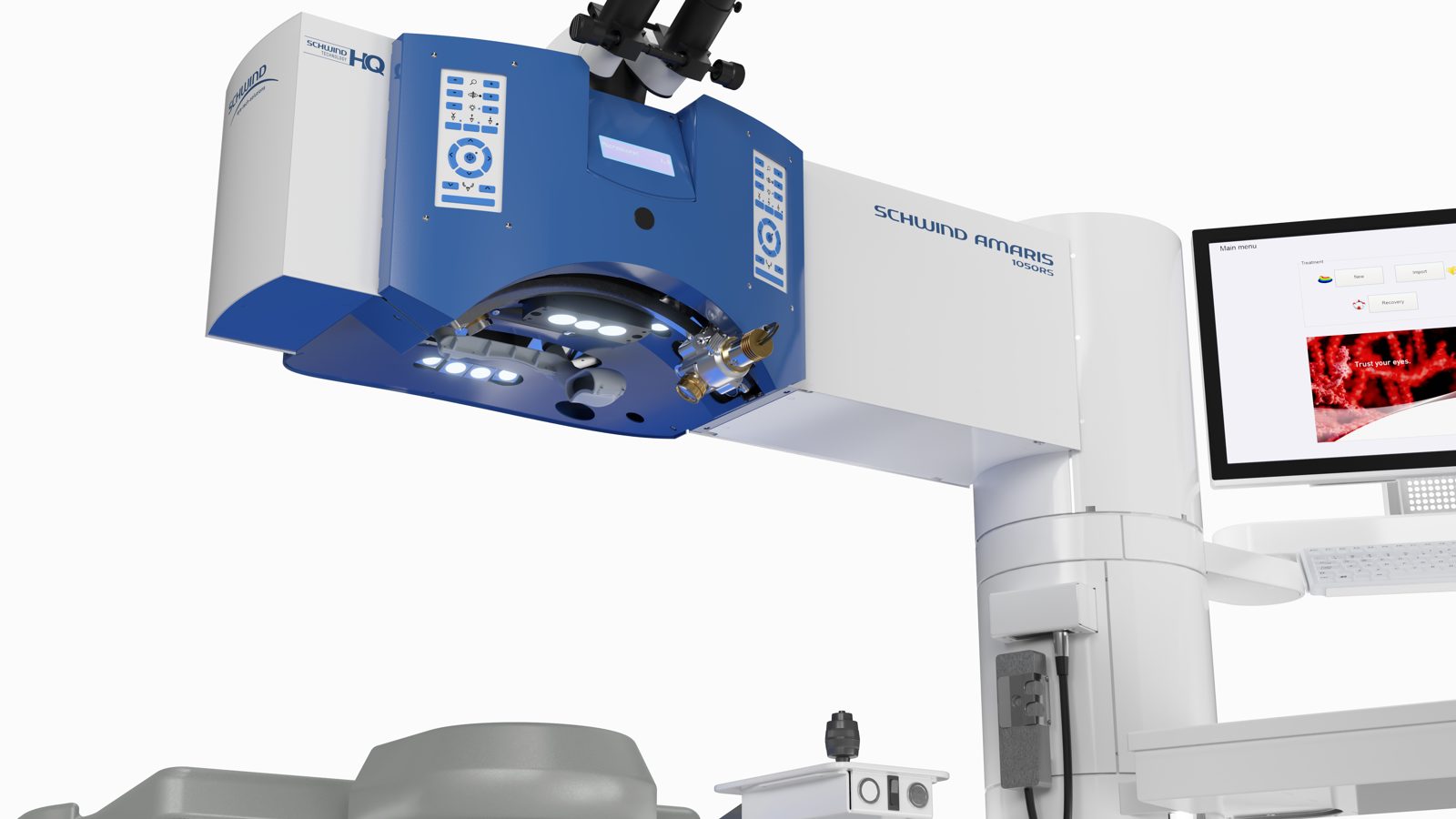
We perform the PresbyMAX eye laser procedure with the Schwind Amaris 1050RS laser platform. The laser is fast and has 7-dimensional eye tracking. This means it has an incredible level of precision, maximizing visual comfort and complete independence from glasses.

Refractive lens exchange technology

After your refractive lens exchange, we can customize the lenses to your individual needs. For example:

  • We can make you lenses for optimal distance or near vision.
  • Toric intraocular lenses (IOLs) make it possible to correct astigmatism (astigmatism of the cornea).
  • Multifocal IOLs or EDOF (enhanced depth of focus) IOLs can correct all areas of vision. These can completely eliminate your dependence on glasses and contact lenses.
Am I suitable for presbyopia correction?

Laser eye surgery for presbyopia

Presbyopia: starting situation and the suitable treatment methods.
without other visual defects PresbyMax/Femto-LASIK
Monovision/lens exchange/ICL
Hyperopia/myopia +3 to -5 dpt PresbyMax/Femto-LASIK/Monovision
Presbyopia-LASIK/lens exchange
All visual defects Lens exchange with
monofocal/multifocal implants from Physiol x Zeiss, Hoya or Panoptix
Presbyopia correction risks

Monovision risks and side effects

A separation of the functions of both eyes is generally well accepted – if both eyes work together perfectly, the brain can easily perceive the overall picture. Although there are effects on spatial vision, these are not a disadvantage for most activities. Depending on your wishes and personal preferences, you will be able to determine whether this method is suitable for you during the preliminary examination.

The brain definitely needs time after the treatment to get used to the new conditions. If you notice after the treatment that the result is not satisfactory for you after all, both eyes can be adjusted to distance vision afterwards. You would then still need reading glasses for near vision. We will be happy to inform you of any other risks.

Watch the best patient videos on laser eye treatment

Get a comprehensive overview of everything you need to know about laser eye surgery

Blog

Eye surgery with measurable precision

Star icon

Two countries, one protocol. Care is our standard

Everything here (even the coffee) is done with the same care.

eye icon

There’s a right way and a wrong way

The right clinic is not too cheap, too “chain” or too costly. The right clinic is precisely right.

Thumb icon

 Over the top precision

With our treatment protocol for vision correction; there’s no room for disappointment.

Star icon

Two countries, one protocol. Care is our standard

Everything here (even the coffee) is done with the same care.

eye icon

There’s a right way and a wrong way

The right clinic is not too cheap, too “chain” or too costly. The right clinic is precisely right.

Thumb icon

 Over the top precision

With our treatment protocol for vision correction; there’s no room for disappointment.

Unsere in der Schweiz optimierten Augenlaser-Behandlungen geben Ihnen das aussergewöhnliche Sehvermögen das Sie verdienen

Unser Augenlaser-Chirurg wird Ihnen bei der Untersuchung die richtige Behandlung fürs Augenlasern in Wien & Linz empfehlen!

Your laser eye surgery specialists at the Eye Laser Center Austria

Austria’s most popular Femto-Lasik surgeons Dr. Victor Derhartunian FEBO & Dr. Paul Jirak FEBO in Vienna & Linz

Dr. Victor Derhartunian
Ophthalmologist, specialist in refractive surgery
FEBO

Having learned his craft from the two pioneers of laser surgery, Dr. Victor Derhartunian is one of the leading laser eye surgeons. He runs the practice in Vienna and can advise his patients in five languages.

Learn more
Dr. Paul Jirak
Ophthalmologist, specialist in refractive surgery
FEBO

Dr. Paul Jirak ist Mitbegründer eines der renommiertesten Zentren für Augenlaserchirurgie in Österreich und behandelt seit 2014 Patienten in Linz. Er ist spezialisiert auf Augenheilkunde, Optometrie, Augenchirurgie und Augenlasern.

Learn more
Assoc. Prof. Priv. Doz. Dr. Christina Leydolt
Ophthalmologist, specialist in artificial lenses and cataracts
FEBO

Dr. Leydolt is an ophthalmologist and specializes in cataract and lens surgery. She heads a research group with this focus, trains young surgeons and gives international lectures.

Learn more
Dr. Victor Derhartunian
Ophthalmologist, specialist in refractive surgery
FEBO

Having learned his craft from the two pioneers of laser surgery, Dr. Victor Derhartunian is one of the leading laser eye surgeons. He runs the practice in Vienna and can advise his patients in five languages.

Learn more
Dr. Paul Jirak
Ophthalmologist, specialist in refractive surgery
FEBO

Dr. Paul Jirak ist Mitbegründer eines der renommiertesten Zentren für Augenlaserchirurgie in Österreich und behandelt seit 2014 Patienten in Linz. Er ist spezialisiert auf Augenheilkunde, Optometrie, Augenchirurgie und Augenlasern.

Learn more
Assoc. Prof. Priv. Doz. Dr. Christina Leydolt
Ophthalmologist, specialist in artificial lenses and cataracts
FEBO

Dr. Leydolt is an ophthalmologist and specializes in cataract and lens surgery. She heads a research group with this focus, trains young surgeons and gives international lectures.

Learn more

Links to reliable sources on the correction of presbyopia

You can find more information about the correction of presbyopia under the following links

Presbyopia: glasses or surgery?

Presbyopia affects everyone sooner or later. It usually starts from the age of 50, a little later for people who are short-sighted. Click here to read more.

Using laser to combat presbyopia and myopia

What is it like if you are short-sighted but age-related long-sightedness is gradually becoming noticeable? Click here to read more.

Correction of presbyopia with intraocular lenses

The aim of the study was to demonstrate good visual rehabilitation with monovision or trifocal intraocular lenses. Patients with monovision (n=52) achieved a high binocular uncorrected visual acuity at distance and near. Click here to read more.

Find out which laser eye treatment is right for you with our 1-minute self-test

Patient bei der Hornhaut-Topographie-Untersuchung vor der Laser-Augenkorrektur, überwacht von einem Spezialisten.

Factors such as age, visual defects, anatomy, medical history and lifestyle may mean that one eye treatment is perfect for one person but not for another. Find out which treatment (if any) can free you from glasses and contact lenses

Selbsttest durchführen
4,9 von 5 – über 240 Google-Bewertungen für EyeLaser Wien & Linz