Presbyopia is the age-related need for reading glasses
- You can correct this common visual defect with our ultra-precise Swiss eye treatments
Laser eye surgery in Vienna & laser eye surgery in Linz with leading Lasik surgeons: Gain visual freedom with our treatment protocol for exceptional laser eye surgery.
Find out everything you need to know about laser eye surgery for presbyopia
When the print in the newspaper suddenly seems to get smaller and smaller and you have to hold it further and further away to be able to read it – that’s when it happens: presbyopia begins.
This visual defect, technically called presbyopia, has nothing to do with long-sightedness or short-sightedness, nor is it a disease, but simply a sign of ageing. It usually manifests itself around the age of 45. The onset of presbyopia can also be accompanied by recurring headaches.
Everyone loses vision between the ages of 40 and 60: the natural lens loses its elasticity. However, our surgical methods can significantly reduce or completely eliminate the need for reading glasses in old age.
From around the age of 40 to 45, reading at close range becomes increasingly difficult – this process is called loss of accommodation. The lens loses its elasticity and the eye loses the ability to adapt to environmental conditions. It can no longer switch optimally between near and far vision.
Presbyopia is not a disease, but a physiological ageing process and normal loss of function due to age.It is progressive, which means that you will see less and less at close range as you get older.
The lens ages
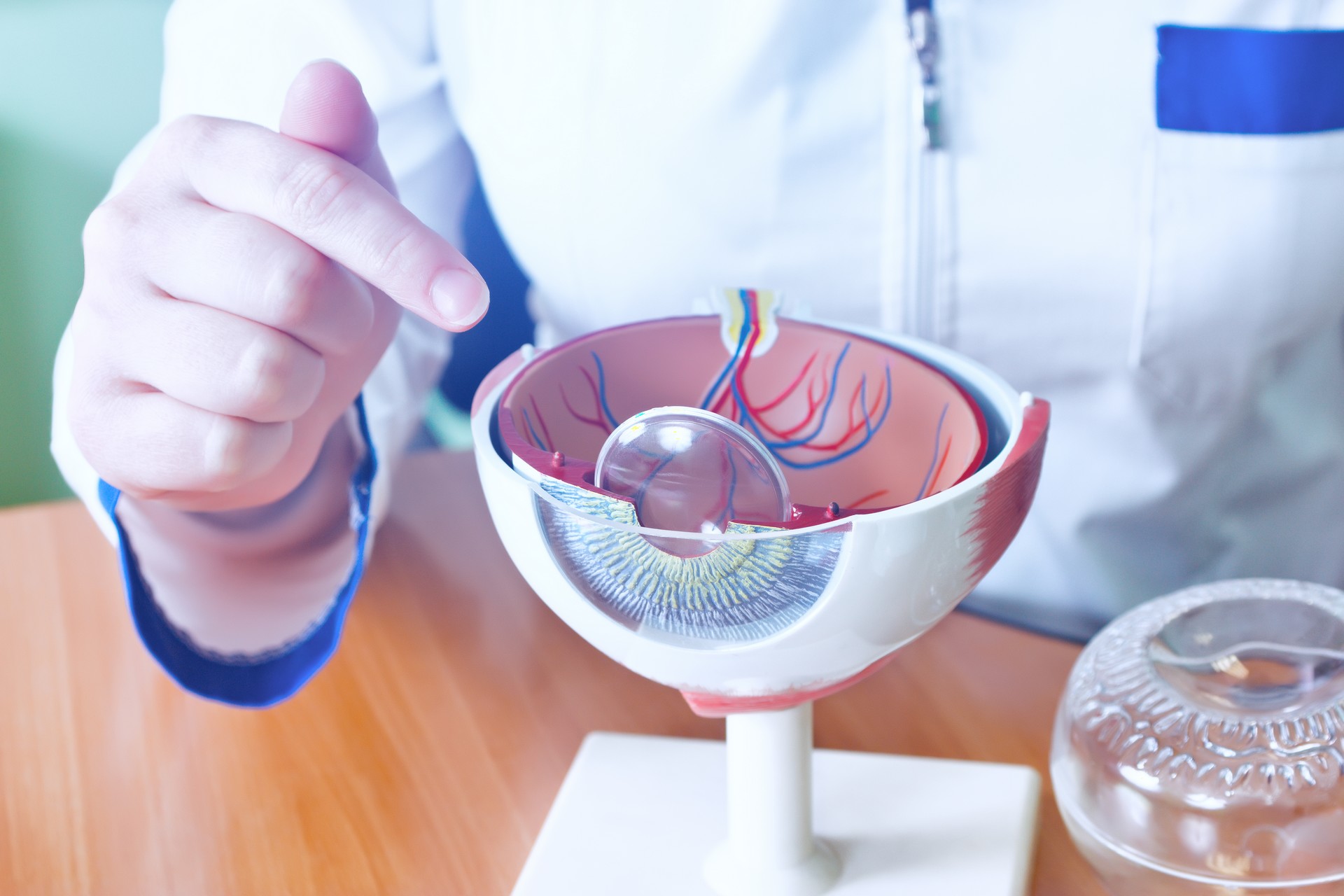
Presbyopia occurs because the lens of the eye, like the entire human organism, ages over the years.Calcium deposits reduce the elasticity of the lens.From around midlife, the lens loses its ability to accommodate, which means that it is no longer able to switch easily between near and far vision.
Presbyopia: Stagnation at 60
Incidentally, presbyopia affects everyone without exception – regardless of whether they previously had defective vision or not.However, accommodation does not deteriorate continuously until the end of life.Rather, it comes to a standstill around the age of 60.
Before the procedure – preliminary examinations
During your first visit with us, we will conduct a comprehensive anamnestic interview.Not only will your previous illnesses, any operations you have undergone and any medication you are taking be recorded in detail, but we will also clarify what particularly bothers you about your presbyopia and which methods of correction you can imagine using.We will provide you with comprehensive information about the various options for correcting your presbyopia.
Complete eye check-up
Your eyes will then be thoroughly examined.Your exact visual acuity and the exact degree of presbyopia will be determined.The retina is also examined and the intraocular pressure is measured.This serves to determine whether other eye diseases are present.The eye is then measured very precisely.This includes optical biometry.It is considered the most precise examination method for measuring axial length and sections of the eyeball.The curvature of the cornea is also measured.This is done completely contact-free using a laser that measures along the visual axis.This method is particularly safe and eliminates unnoticeable measurement errors, such as those that can occur when measuring using ultrasound.
Corneal examination
The cornea is also thoroughly examined and measured. The cornea, whose technical term is Cornea (the word comes from Greek and means “horn”), protects the eye and is, so to speak, the “window” of the eyes – light passes through it. Together with the lens, the cornea forms the optical system. For optimal correction of presbyopia, a precise map of the cornea is created. With the help of corneal tomography, the anterior and posterior walls as well as the thickness of the cornea are precisely measured. This examination serves to determine all anatomical properties of the cornea. From this “map”, the refractive power of the eyes is derived, which plays a very important role in the corrective surgery.
In the near future, we will also offer you another painless examination of the anterior wall of the cornea – optical coherence tomography performed in the anterior segment. This examination is contactless and can be compared to an ultrasound examination. However, it uses laser light instead of sound.
Wavefront examination
Finally, a wavefront examination is carried out.A beam of light sent into the eye is focused precisely on the retina.From this point, a light wavefront spreads out through the lens and the cornea.This examination method can be used to determine exactly where laser treatment is required to optimize vision.
“No, I don’t want glasses”
If the thought of reading, varifocal, or trifocal glasses is unappealing to you, there are several surgical options to correct presbyopia. At EyeLaser, we offer various options for correcting presbyopia. Together, we will find the most suitable procedure for you.
These procedures are available at EyeLaser for the correction of presbyopia:
Monovision, either with
Lens exchange, also known as refractive lens exchange, can be carried out with a variety of different, individually fitted lenses.We offer the right lens for every type of visual defect:
Laser eye surgery for presbyopia
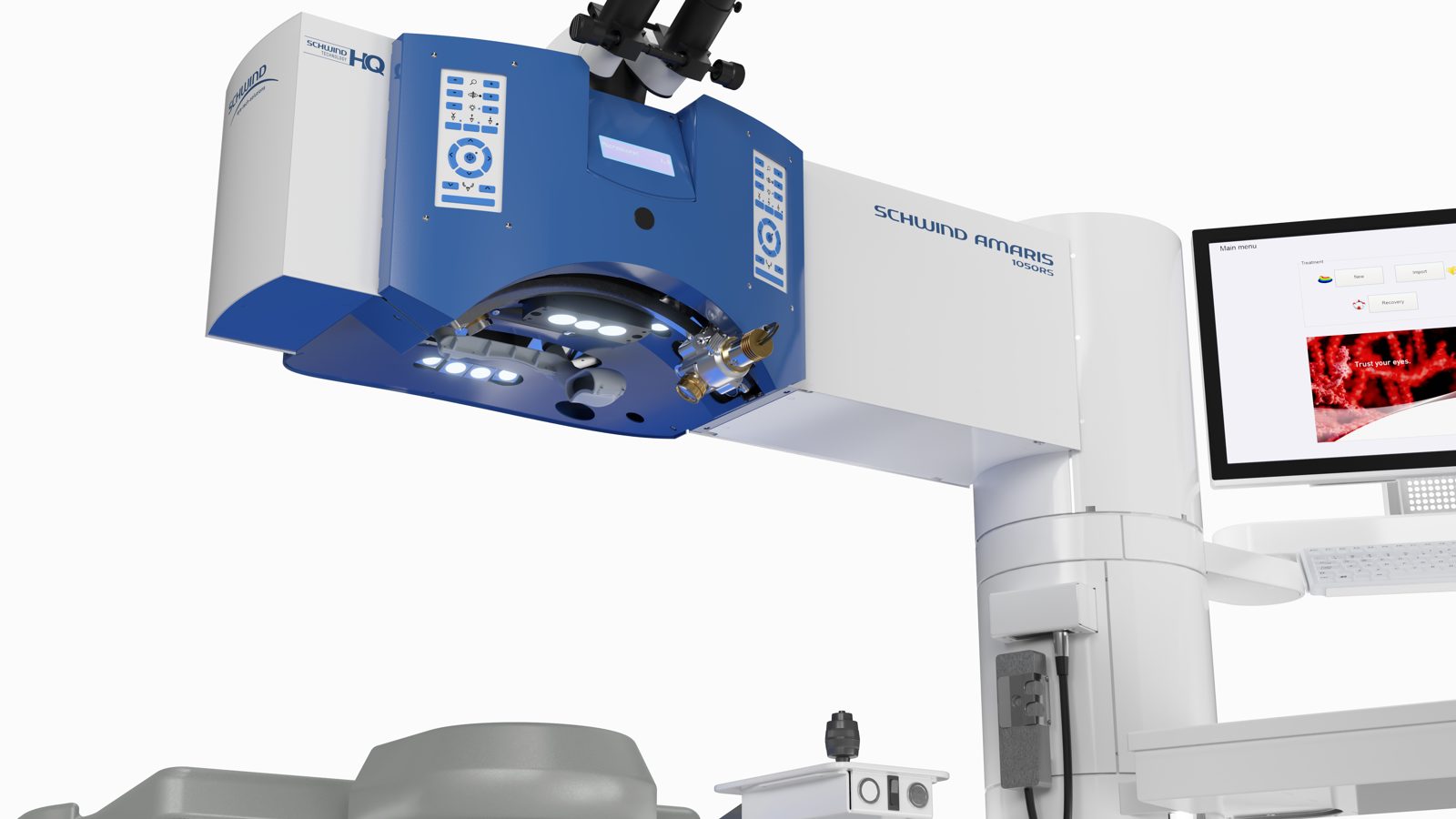
Pure presbyopia can be treated in eye surgery with the PresbyMax eye laser profile (most innovative variant) and monovision. This means that one eye is made short-sighted and the other normal-sighted (for good distance vision). The advantage of laser eye surgery for presbyopia is the minimally invasive procedure. In contrast to lens surgery, the eye is not opened here; the laser treatment is limited to the cornea. Generally, people between 40 and 65 are suitable for this variant.
Do you already have presbyopia?
Incidentally, you can easily test whether you have already started to develop presbyopia.Concentrate on reading a text at close range, then quickly look at the window, a picture or the TV set that is further away.If it takes a few seconds for your eyes to switch to distance vision (until you can see clearly again), then you should seek specialist eye care.
Select the option that best suits you to find your optimal treatment method

After the age of 40, most of us need reading glasses (even if we have never needed glasses before)! Independence from reading glasses is achievable, but not all eyes can be treated. Make an appointment to find out if you are suitable for presbyopia correction:
Make an appointmentWir sind stolz darauf, mit erstklassigen privaten Krankenversicherungen zusammenzuarbeiten


Get a comprehensive overview of everything you need to know to get rid of your reading glasses
Austria’s most popular Femto-Lasik surgeons Dr. Victor Derhartunian FEBO & Dr. Paul Jirak FEBO in Vienna & Linz
You can find more information about the correction of presbyopia under the following links
Presbyopia affects everyone sooner or later. It usually starts from the age of 50, a little later for people who are short-sighted. Click here to read more.
What is it like if you are short-sighted but age-related long-sightedness is gradually becoming noticeable? Click here to read more.
The aim of the study was to demonstrate good visual rehabilitation with monovision or trifocal intraocular lenses. Patients with monovision (n=52) achieved a high binocular uncorrected visual acuity at distance and near. Click here to read more.

Things like age, eye shape, history and lifestyle make an eye treatment perfect for one person, but not another. Find out which treatment (if any) could free you from glasses and contacts
Take a quizReading glasses are often part of everyday life from the age of 45 – but they don’t have to be! Here you can find out everything about laser treatment for presbyopia: What methods are available, how does the treatment work, and can you finally see clearly again without glasses?
Yes, the stiffening of the lens (presbyopia) can now also be corrected with a laser. Methods such as PresbyMAX or Monovision are used for this. These correct near vision by shaping the cornea so that you can see clearly both up close and at a distance. The success rate with PresbyMAX, for example, approaches 100 percent with patient satisfaction exceeding 95 percent.
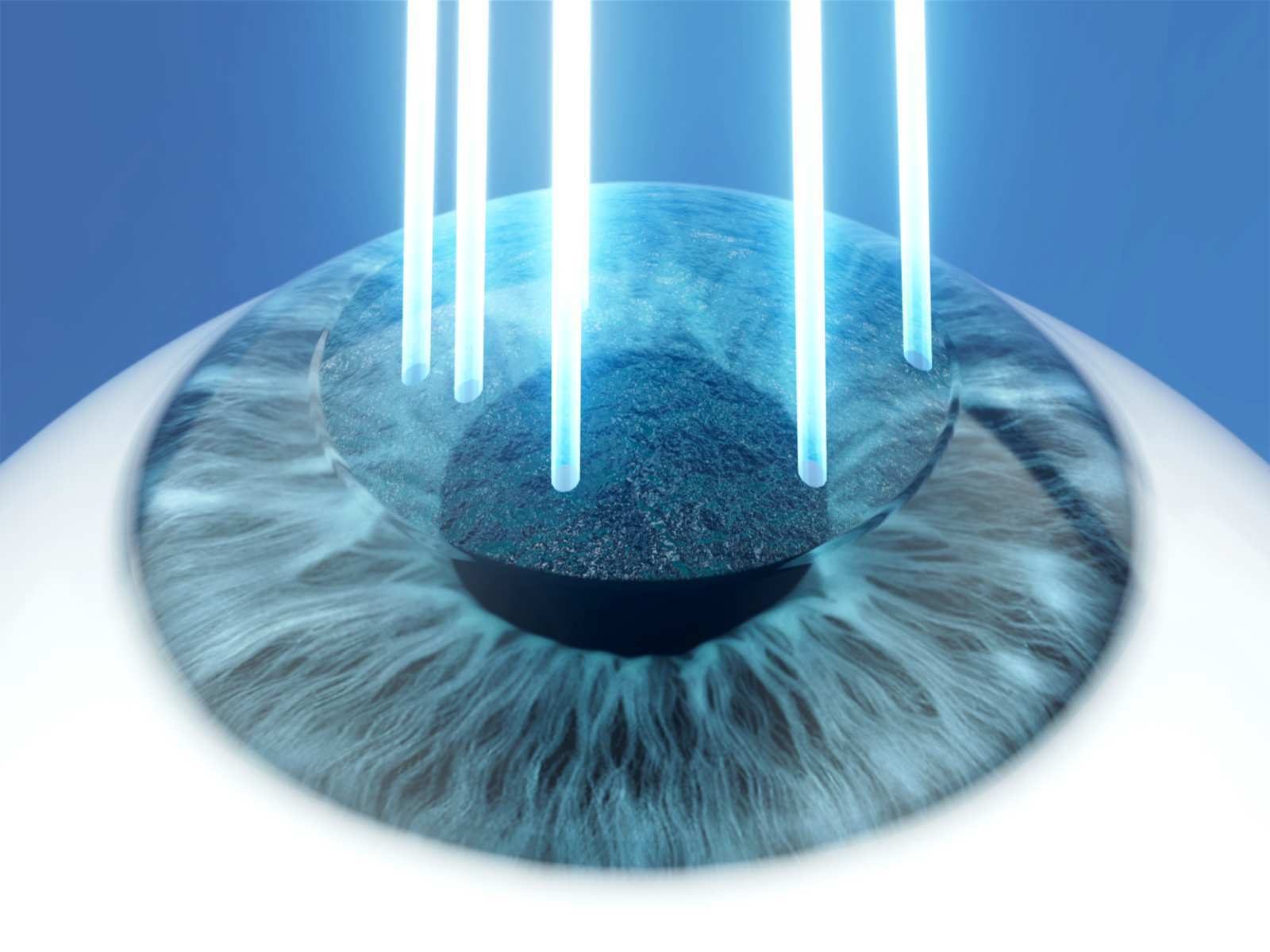
The most frequently used method for treating presbyopia at EyeLaser Vienna is PresbyMAX. With the excimer laser, the cornea is shaped so that different visual ranges (near, intermediate, and far vision) are sharply imaged. The laser creates a multifocal corneal surface with multiple focal points, which can enable a life free of glasses.
With monovision, one eye is corrected for good distance vision and the other eye for good near vision. The brain learns to use the sharper image depending on the distance. This solution is simpler but can lead to some loss of spatial vision and a longer adaptation phase.
After a detailed preliminary examination, during which your vision values and corneal structure are analyzed, the laser treatment is performed on an outpatient basis. The procedure usually takes a few minutes per eye and is minimally painful. This is followed by a short recovery phase with regular follow-up checks to ensure the success of the treatment.
Healing after presbyopia correction usually takes several weeks. However, patients often notice the first improvements in vision after just a few hours. Physical healing is usually completed faster than the adaptation the brain needs to get used to the new visual impressions. Final visual acuity is usually achieved after four to six weeks.
Laser eye surgery for presbyopia costs around 2,500 Euros per eye at EyeLaser Vienna. This includes the preliminary examination, minimally invasive procedure, and two follow-up examinations. No hidden costs. In addition, attractive financing offers are available (interest-free over 6 months and 3 installments or from 48 Euros per month with an attractive loan from our partner bank).