
What You Will Learn in this Text

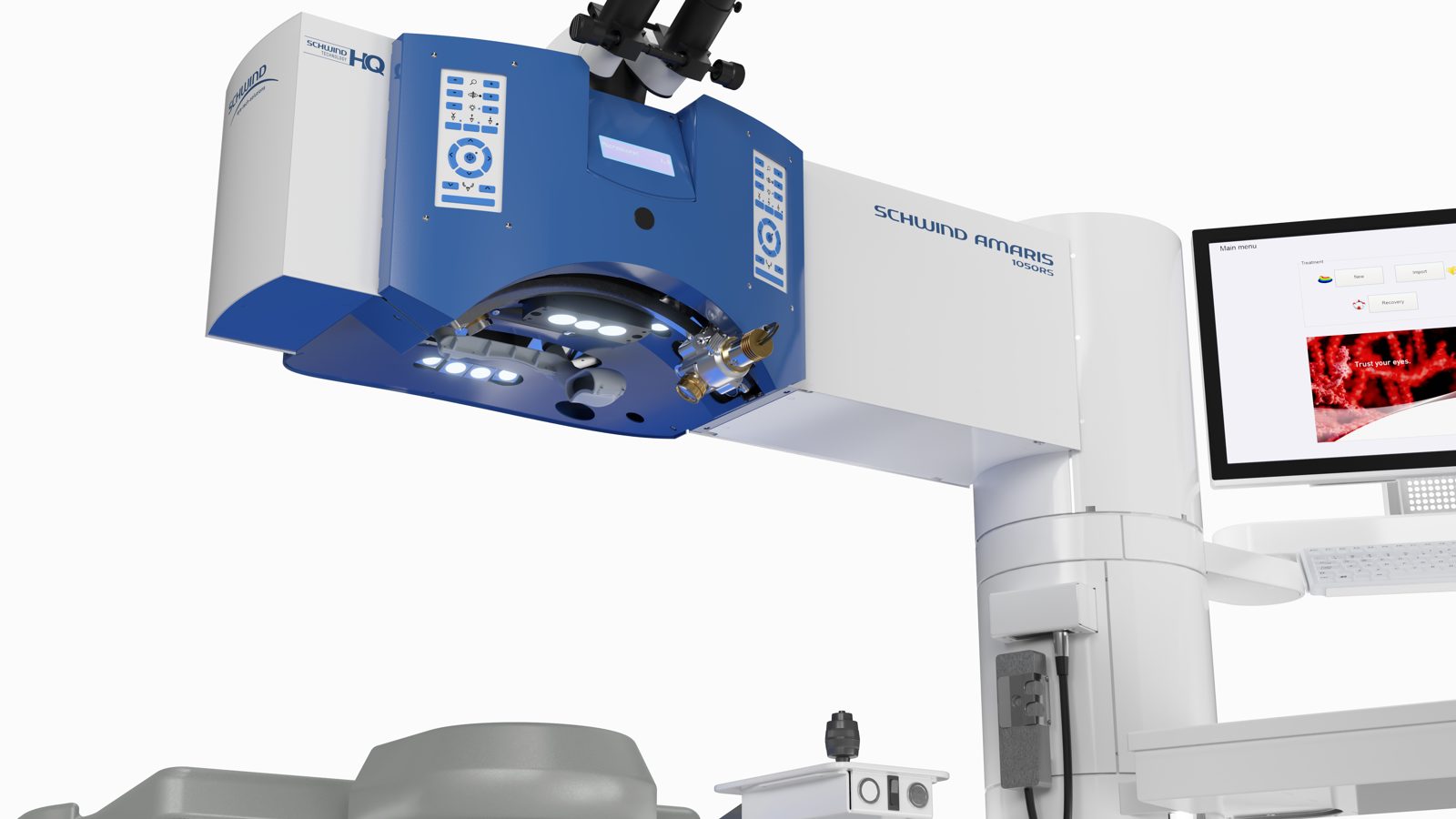
Phototherapeutic keratectomy (PTK) is a specialized medical laser procedure to heal the surface of the cornea. Unlike purely optical corrections, the focus here is on restoring a pain-free, healthy eye. EyeLaser Vienna uses the precise Trans-PTK (no-touch technique) with the SCHWIND Amaris laser to remove diseased tissue, scars, or dystrophies with micrometer precision and smooth the cornea.

Why Ointments are Often not Enough

Mechanical defects of the cornea often require laser smoothing so that the tissue can adhere permanently again – drops often only provide short-term relief.

End of Morning Pain

PTK breaks the vicious cycle of the cornea tearing open at night and stabbing pain upon waking.

Does the Health Insurance (ÖGK/SVS) Pay?

Since this procedure is often considered medically necessary, we support you in the reimbursement of costs by the social insurance (optional doctor principle).

What to Do about Scars & Dystrophies?

We explain how the laser precisely reduces even old scars or genetic changes (e.g. map-dot-fingerprint).

Who Will Treat Me?

Dr. Victor Derhartunian is a Fellow of the World College of Refractive Surgery & Visual Sciences (FWCRS) and holds the European specialist diploma FEBO.

What is the Difference between PTK and a Normal Eye Laser Surgery?

SCHWIND AMARIS 1050RS excimer laser with treatment head and control monitor

While procedures like LASIK primarily aim to eliminate the need for glasses, PTK (Phototherapeutic Keratectomy) is a therapeutic procedure.

We use the most modern form, Trans-PTK (No-Touch):

  1. No-touch: The laser removes the unstable epithelium and the diseased tissue in one step.
  2. Smoothing: The laser polishes the corneal surface. Irregularities, scar tissue, or dystrophies are removed with micrometer precision.
  3. The Result: A fresh, extremely smooth wound surface is created. When the epithelium regrows here, it regains extremely firm adhesion through special “anchoring fibrils”.

First Aid for Acute Morning Pain

Nahaufnahme eines stark geröteten Auges einer jungen Frau

If your eye hurts when you wake up:

  • Stay calm: Keep your eye closed!
  • Do not rub: Do not try to force the lid open.
  • Lubricate: Apply plenty of lubricating eye drops or gel to the inner corner of the eye.
  • Wait: Wait until the liquid has spread before gently opening the lid.
  • Appointment: Make an appointment with us soon for a check-up.

Areas of Application: when Does the Laser Help?

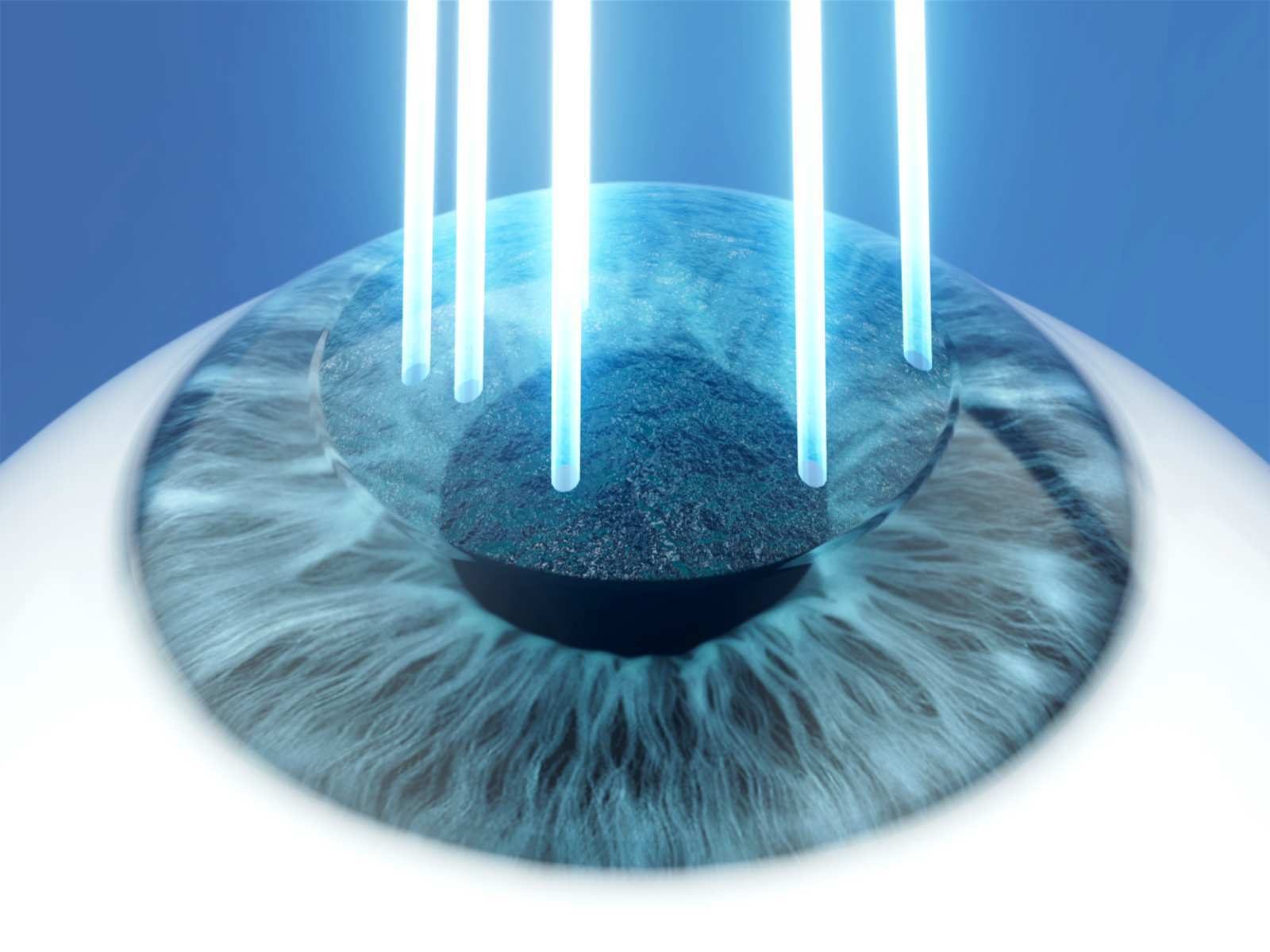
Illustration: the excimer laser removes the top layer of the cornea (epithelium)

In Vienna, we frequently treat patients with the following diagnoses:

  • Recurrent corneal erosion (RCE): Recurring defects after minor injuries (e.g., by branch, fingernail, paper).
  • Map-Dot-Fingerprint Dystrophy: A genetic predisposition in which the corneal layers detach (often misdiagnosed as “dry eye”).
  • Salzmann’s Nodular Degeneration: Raised bluish-white nodules on the cornea that act like foreign bodies.
  • Corneal scars: After infections or injuries that lie in the field of vision and cause “foggy vision.”

Breaking the Pain Cycle

Thoughtful young woman with her hand on her chin against a light grey background

“As a doctor, I don’t just see the cornea; I see the person behind it. Patients with corneal damage are often worn down. The constant worry, ‘Will it happen again tonight?’ creates stress. My goal as a surgeon with FWCRS qualification is not only to offer you medical high-tech but also to restore your sense of security. We don’t just repair tissue; we restore your undisturbed sleep.”

— Dr. Victor Derhartunian, FEBO, FWCRS

Is PTK Right for You?

Smiling older woman with grey hair resting her cheek on her hand

🟢 GREEN LIGHT (Ideally suited)

  • You experience morning pain when opening your eyes (erosion symptoms).
  • Conservative therapies (ointments, bandage contact lenses) have been unsuccessful for over 3 months.
  • You have superficial scars that cause glare (halos/glare).
  • Diagnosed Map-Dot-Fingerprint Dystrophy.

🟡 YELLOW LIGHT (Further assessment needed)

  • Combination desired: Do you want to get rid of your glasses at the same time? (Refractive PTK is often possible).
  • Deep scars: Measurement of residual corneal thickness using OCT is required.

🔴 RED LIGHT (Not suitable / Alternatives)

  • Acute, florid infections (e.g., active herpes) – eye must heal first.
  • Advanced keratoconus (Alternative: Crosslinking).

Methods in Comparison

Comparison: PTK / Trans-PTK (Therapeutic) · Trans-PRK (Refractive) · Conservative (Ointments)
Feature PTK / Trans-PTK (Therapeutic) Trans-PRK (Refractive) Conservative (Ointments)
Main goal Tissue healing, smoothing, freedom from pain Diopter correction (freedom from glasses) Symptom relief
Technique Superficial removal & polishing Removal according to diopter profile None
Wound healing 3–5 days (bandage lens) 3–5 days (bandage lens) Continuously necessary
Suitability scars Excellent (superficial) Good (if combined) No effect
Costs Often health insurance reimbursement (private doctor) Private service Prescription fee

Your Path to Treatment in Vienna

Thoughtful young woman with her hand on her chin against a light grey background

Before Treatment:

  • Contact Lenses: Discontinue soft lenses 1 week, hard lenses 2-3 weeks before the examination.
  • Health: The eye should be as irritation-free as possible at the time of surgery.

After Treatment:

  • Pain Management: The first 2-3 days are often painful (tearing, foreign body sensation). We will provide you with medication.
  • Work Leave: Plan for approximately 1 week of sick leave.
  • UV Protection: Wear sunglasses for 3 months when exposed to sun (important in the mountains or near water) to prevent scarring.

Don’t Suffer from Painful Nights any Longer.

Recurrent erosion or bothersome corneal scars don’t have to be permanent. Let Dr. Victor Derhartunian (FWCRS) examine you and find out if PTK can restore your quality of life.

Schedule your PTK suitability test now.

15 Frequently Asked Questions about PTK and Corneal Erosions (FAQ)

Does the ÖGK or SVS Pay for the Laser Treatment (PTK)?

Yes, in many cases, PTK is a medically necessary benefit covered by health insurance (“curative treatment”) because it is not a cosmetic surgery. Since EyeLaser is a private practice, you will initially pay for the procedure privately. However, we will provide you with a detailed medical bill with the correct diagnostic codes. You can submit this to the Austrian Health Insurance Fund (ÖGK), BVAEB, or SVS. Depending on your insurance plan, you will receive a portion of the costs back. Private health insurance companies usually cover 100% of the costs if there is a medical indication.

Does PTK Provide Lasting Relief from Recurrent Erosion, or Does it Come Back?

PTK is considered the gold standard in the treatment of recurrent erosion when conservative measures such as ointments fail. By precisely removing the top layer of tissue and “polishing” the underlying Bowman’s membrane, we create a smooth wound bed. This allows the new epithelial cells to form strong “anchoring fibrils” that act like a strong Velcro fastener. The recurrence rate is extremely low (over 90% success rate). If problems do occur years later, follow-up treatment is usually possible.

I am afraid of pain during the surgery. Will I feel anything?

No, the procedure itself is absolutely painless for you. We use highly effective anesthetic eye drops that numb the eye within seconds. You will only feel the lid speculum that holds the eye open and some rinsing fluid. The laser itself works without contact and cannot be felt.

How Severe is the Pain AFTER the Treatment?

We want to be honest with you: Because PTK creates a superficial wound area (similar to a skin abrasion), the first 2 to 3 days after the procedure are often uncomfortable. Typical symptoms include burning, tearing, foreign body sensation, and light sensitivity. However, we will not leave you alone: You will receive a comprehensive plan from us with painkillers and drops, as well as an emergency number. From the 4th day onwards, there is usually a rapid improvement as soon as the epithelium has closed.

Can I get Rid of My Glasses at the Same Time with PTK?

This is often possible and a very elegant solution. This is called “refractive PTK” or topography-guided Trans-PRK. If we have to remove tissue anyway to remove a scar, we can often calculate the ablation profile so that your refractive error (nearsightedness, astigmatism) is also corrected. Dr. Derhartunian must check this individually, as the health of the cornea always takes precedence over diopter correction.

Do Corneal Scars Disappear Completely?

Superficial scars can often be completely removed, so that the cornea is crystal clear again. For deeper scars, we can usually smooth them out so much (“Smoothing”) that the glare (Glares/Halos) is massively reduced and the visual acuity increases significantly. Before the procedure, we use OCT to measure exactly how deep the scar is in order to predict the result realistically.

Where in Vienna Does the Procedure Take Place?

The entire treatment takes place directly in our modern clinic at Opernring 1, 1010 Vienna (opposite the State Opera). We have our own high-end laser operating room that meets the strictest hygiene standards. You do not have to go to a public hospital and there are no long waiting times.

How Long Will I be on Sick Leave?

Please expect about one week (5 to 7 days) of sick leave. In the first few days, vision is blurred due to wound healing (“frosted glass effect”) and the eye is sensitive to light. Screen work or driving is not possible during this time. We will of course issue you with a medical certificate for your employer or health insurance company.

What does the title FWCRS mean for Dr. Derhartunian?

FWCRS stands for “Fellow of the World College of Refractive Surgery & Visual Sciences”, an international society for refractive surgery. Dr. Derhartunian holds this title alongside the European specialist diploma FEBO (Fellow of the European Board of Ophthalmology).

Is the Treatment also Possible for Children?

At EyeLaser, we generally treat patients from the age of 18. In children with traumatic scars or severe dystrophies, PTK is often only possible under general anesthesia. Here we recommend specialized university hospitals (e.g. AKH Vienna). We would be happy to advise you and refer you to the right experts.

What Happens with Salzmann's Degeneration or Map-Dot-Fingerprint?

In Salzmann’s degeneration (bluish nodules) or Map-Dot-Fingerprint dystrophy, the corneal surface is irregular. PTK precisely smooths out these irregularities. The result: The often agonizing foreign body sensation disappears immediately, and visual acuity often improves dramatically because the optical distortion caused by the irregularities is eliminated.

How Quickly Can I get an Appointment in Vienna?

We know that patients with recurrent erosion often have acute pain and a high level of suffering. Therefore, we strive to provide very prompt appointments for acute complaints. Please call us and mention your symptoms (“Acute pain when waking up”) so that we can prioritize you.

Am I Allowed to Do Sports after the Surgery?

As soon as the therapeutic contact lens is removed (usually after 4-5 days), light sports (jogging, fitness) are possible again. However, you should avoid swimming (indoor pool, Alte Donau) and sauna for at least 2 to 3 weeks to minimize the risk of infection during the healing phase.

Which Drops Do I Have to Take Afterwards?

You will receive an exact drop plan from us (antibiotics and cortisone) to prevent inflammation and control healing. Preservative-free artificial tears (e.g. Hylo-Gel or Thealoz Duo) are very important in the weeks and months afterwards. These keep the newly formed epithelium supple and prevent it from tearing again.

What if I Move My Eye During the Laser Treatment?

You don’t have to worry about having to “hold still” your eye. Our SCHWIND Amaris laser has a high-performance eye tracker (7D). It tracks your eye movements over 1000 times per second and compensates for them in a flash. If you move your eye too much, the laser stops automatically immediately. Misfires are therefore technically impossible.

Read on

What comes next?

PTK is a medical procedure, not a vision-correction method. If you also want to correct a refractive error:

Book an appointment Vienna
4,9 von 5 – über 240 Google-Bewertungen für EyeLaser Wien & Linz