
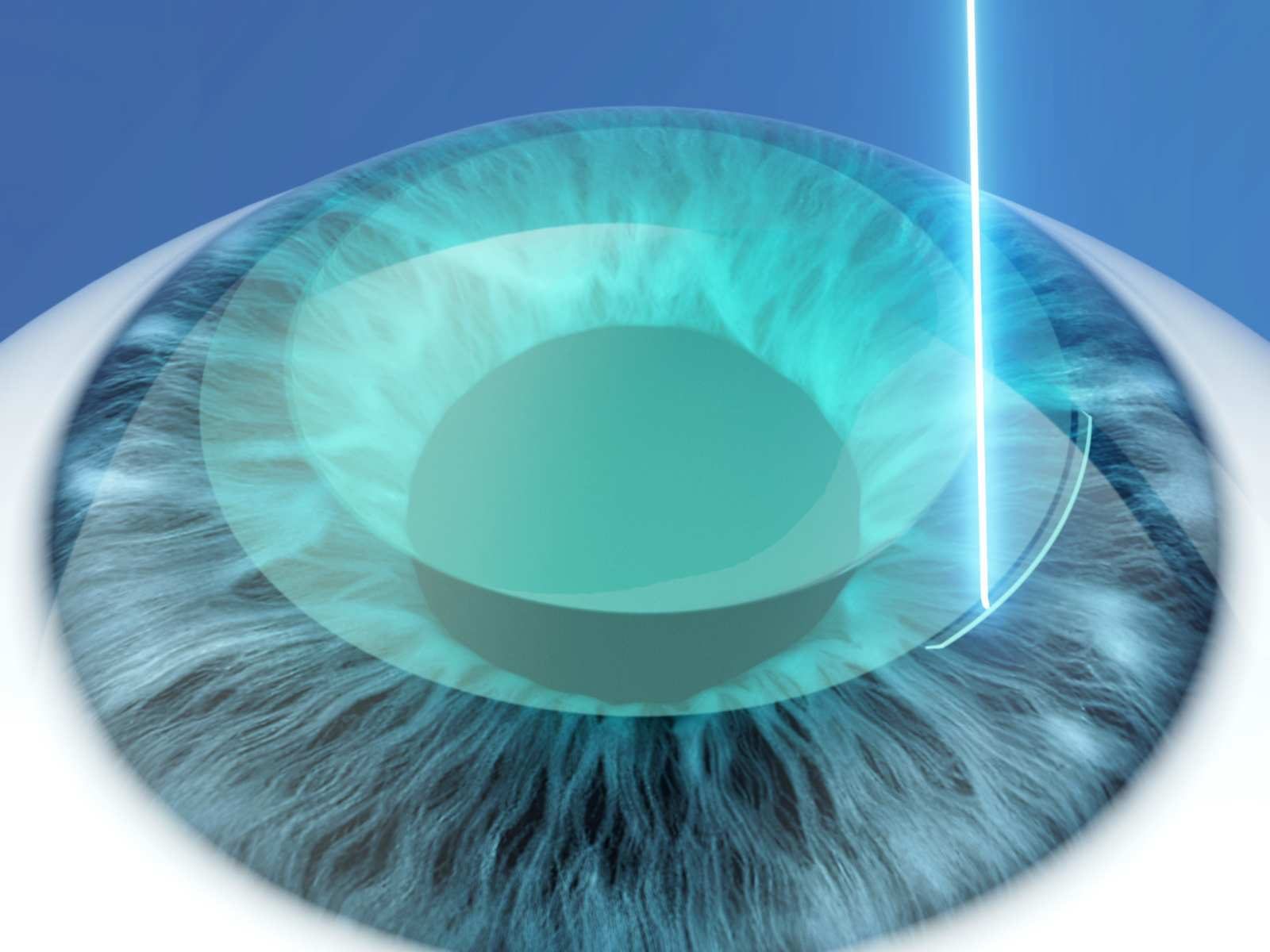
Watch: how SmartSight works

The SCHWIND ATOS femtosecond laser shapes a lens-shaped disc (lenticule) inside the cornea, which is removed through a small opening. No flap, no surface ablation.Animation: SCHWIND eye-tech-solutions

SmartSight Nova, SMILE® or SMILE pro®? The evolution of lenticule extraction

Illustration: small opening in the cornea for removing the lenticule in SmartSight

In brief

What
SmartSight removes a lenticule through an access of just 2 mm. No flap, no surface ablation.
For whom
Short-sightedness up to about –10 D, astigmatism up to 6 D, prescription stable for 12 months, age 18 and over.
Duration
About 10 minutes per eye, both eyes on the same day.
Back to work
Usually after 1 to 3 days.
Price
€2,500 per eye, fixed price incl. 12 months of aftercare and re-treatment within 12 months. From €48/month.
Not suitable
Long-sightedness, keratoconus, unstable prescription, pregnancy.

If you are looking for information on minimally invasive eye laser surgery, you will often come across various brand names. The surgical principle behind it is always Lenticular extraction.

This principle was made known worldwide by the established ReLEx SMILE® procedures and the newer generation SMILE pro® (both registered trademarks of Carl Zeiss Meditec). This pioneering work has sustainably changed refractive surgery.

Why did we at EyeLaser Vienna choose SmartSight Nova (Schwind ATOS®)?
We consider SmartSight Nova to be the next logical, technological evolutionary step. This is not about marketing, but about pure physics and your visual quality. The decisive difference lies in the centering.
The pupil trap and the solution: Visual Axis Targeting (CenTrax®)

Classic methods and older versions of lenticule extraction often stubbornly center the treatment on the geometric center of the pupil.

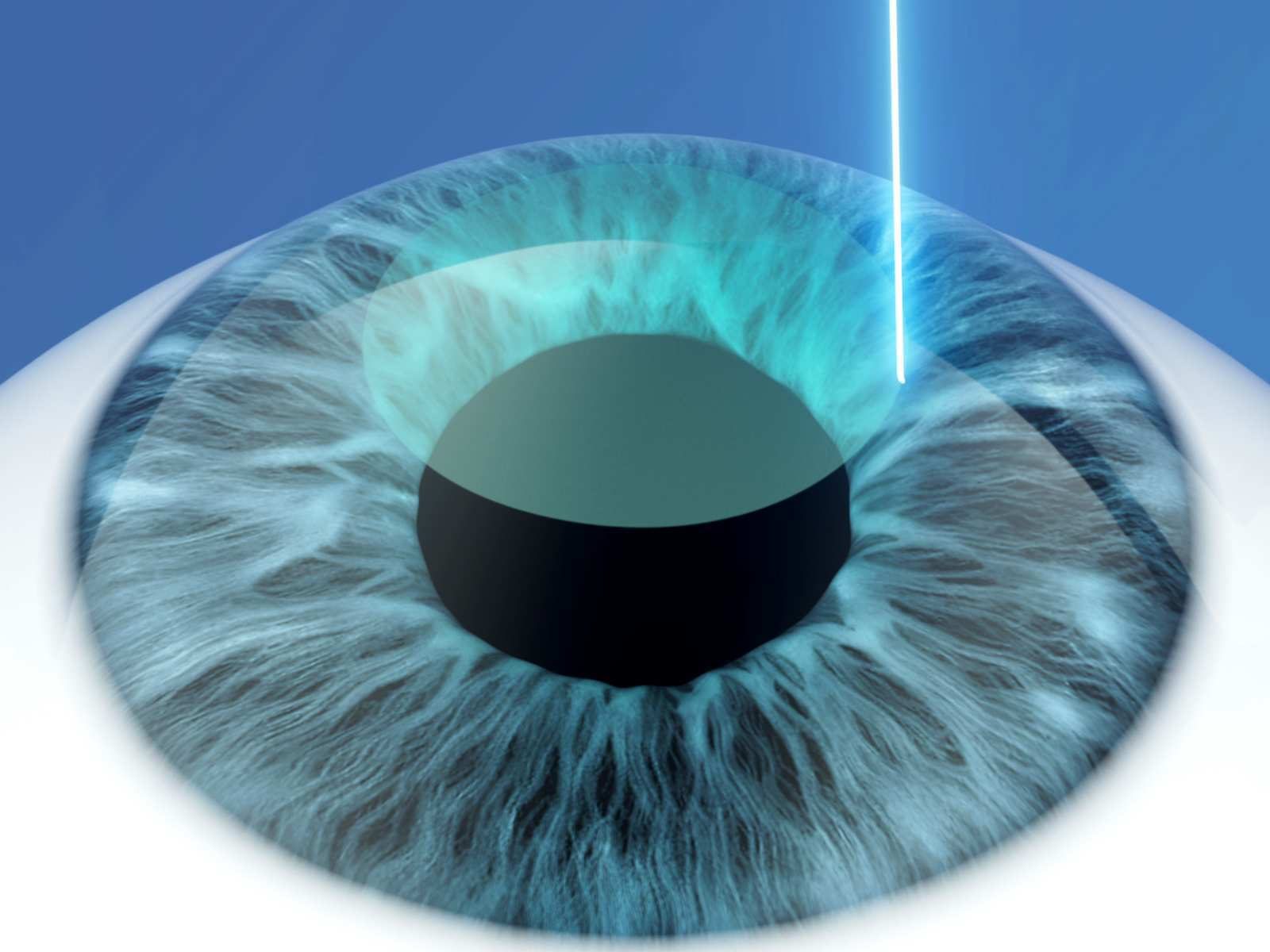
Watch: centration with CenTrax

CenTrax takes the position of the visual axis and the rotation of the eye when lying down (cyclotorsion) from the pre-operative examination. During docking, the system guides to this axis and compensates for a small deviation before the laser starts. This is the difference between SmartSight Nova and centring on the middle of the pupil.Animation: SCHWIND eye-tech-solutions
Illustration: in SmartSight, the femtosecond laser shapes a lenticule inside the cornea
  • The catch: We humans do not look exactly with the center of the pupil. Our sharpest point of vision (fovea) defines the so-called visual axis. If the laser is centered on the pupil, but you look slightly off-center, the correction will not be 100% accurate. This can lead to slight blurring (aberrations) or halos at night.
  • The solution – SmartSight Nova guided by CenTrax®: The system ignores the pupil center and aligns itself with your actual visual axis. The laser treatment lands exactly where your eye processes light.
  • Nova-Polishing: The Nova software polishes the lenticule microscopically smooth. This massively accelerates the “wow effect” of vision after surgery, as the initial milky haze (haze effect) subsides much faster.

The detailed method comparison

How does our technology compare globally? How do you know if SmartSight Nova is better for you than the proven LASIK? Here are the hard clinical facts:

Comparison: SmartSight Nova (EyeLaser) · SmartSight (Standard) · SMILE® pro · Femto-LASIK 7D
Feature / Method SmartSight Nova (EyeLaser) SmartSight (Standard) SMILE® pro Femto-LASIK 7D
Centering ✅ On the visual axis (CenTrax) Geometric pupil center On the visual axis Pupil center (with 7D Tracking)
Corneal incision No flap (2 mm) No flap (2-3 mm) No flap (2 mm) Large flap (approx. 20 mm)
Treatment time (laser) < 20 seconds < 35 seconds < 10 seconds Varies (approx. 15-20 sec.)
Compensation for rolling movement (cyclotorsion) ✅ Automatic (in real time) Limited Automatic Automatic (7D)
Risk: Dry eyes 💧 Minimal (nerves remain intact) 💧 Minimal 💧 Minimal 💧💧 Increased (in the first few weeks)
Suitability for sports (boxing etc.) ⭐⭐⭐⭐⭐ Excellent ⭐⭐⭐⭐⭐ Excellent ⭐⭐⭐⭐⭐ Excellent ⭐⭐⭐ Good (flap protection necessary)
For farsightedness? No No Yes (newly approved) ✅ Yes (the gold standard)

Pure biomechanics: Protection of the subbasal nerve plexus

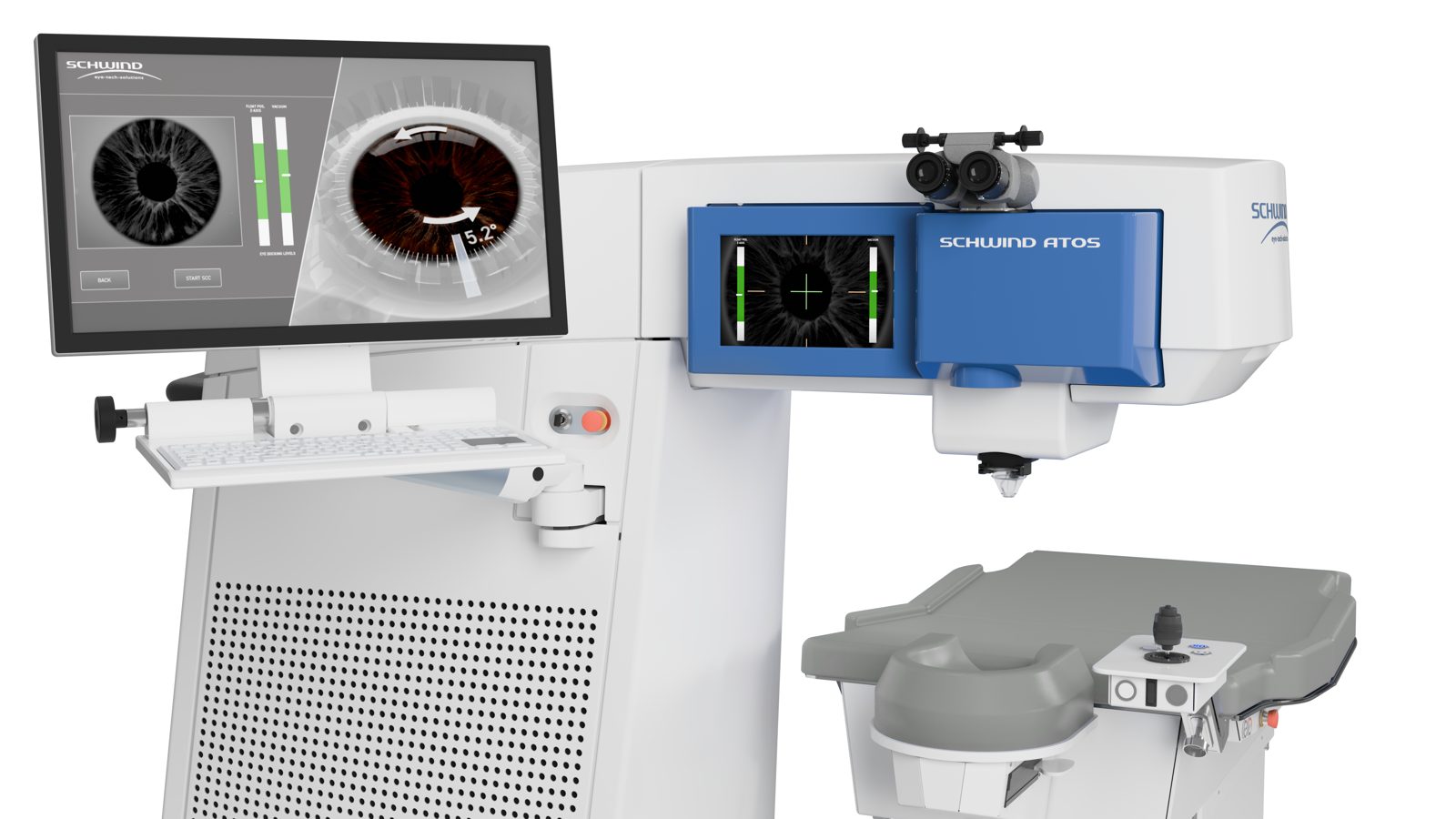
SCHWIND ATOS femtosecond laser with screen and patient bed

In classic LASIK, an incision of about 20 millimeters is made. This inevitably severs fine corneal nerves (the subbasal nerve plexus), which often leads to dry eyes in the first few weeks after surgery.

Since SmartSight Nova works through a tiny 2 mm incision, these highly sensitive nerves remain intact. The feedback to the tear glands continues to function perfectly. This makes the procedure the number one choice for anyone who works a lot on screens or can no longer tolerate contact lenses due to dryness.

The EyeLaser suitability check: Traffic light system for SmartSight Nova

🟢 Green Light (Ideal Conditions):

  • Nearsightedness: From -1.0 to -10.0 diopters.
  • Astigmatism: Up to approx. 5 diopters.
  • People with dry eyes / contact lens intolerance.
  • Athletes (boxing, soccer, swimming), as no flap can slip.
  • Professions with physical demands (police, fire department, trades).

🟡 Yellow light (Individual medical examination):

  • High prescription values with very thin corneas (tissue limit).
  • Age 45-50 and above (reading glasses age): Here we examine “PresbyMAX” or lens replacement as long-term better alternatives for freedom from glasses.

🔴 Red light (Not suitable):

  • Pure farsightedness (hyperopia): Femto-LASIK is often more precise here.
  • Keratoconus (pathological corneal weakness).
  • Pregnancy / breastfeeding (hormones temporarily change visual acuity).

Your healing

How your healing after SmartSight progresses

Realistic guide values from practice. Your personal course is closely monitored at the follow-up checks.

SURGERY DAY

Vision as if through frosted glass, slight foreign-body sensation; rest at home.

DAY 1

Follow-up check at the clinic. Usually good everyday vision already, short screen work possible.

DAY 2–3

Driving after medical clearance, return to everyday work.

WEEK 1

Sport possible again (no contact or water sports).

WEEK 2–4

Full resilience including contact sports and swimming.

MONTH 1–3

The final result stabilises, accompanied by the follow-up checks.

Transparency

What are the risks, and how do we manage them?

Honesty is part of good medicine. We discuss these points openly before every treatment:

iDry eyes for a few weeks; less pronounced than with flap procedures, as fewer corneal nerves are cut. Well treatable and temporary.
iIncomplete lenticule removal: very rare; handled during the procedure by the surgeon’s experience.
iHalos at night in the early period; they usually subside.
iUnder- or overcorrection: rare; re-treatment within 12 months is included in the fixed price and is performed gently on the corneal surface.
Your safety net: Should a re-treatment be necessary within 12 months, it is included in the fixed price at EyeLaser Vienna. And for emergencies you receive the surgeon’s personal mobile number, around the clock, including weekends.

Honestly asked

What if …? The most common worries before SmartSight

Almost everyone who comes to us has the same questions in mind and does not always dare to ask them. Here are the honest answers.

“Does it hurt?”

No. The eye is numbed with drops. While the laser forms the lenticule, a contact glass holds the eye gently for about 25 seconds; you feel pressure, not pain. Afterwards a foreign-body sensation for a few hours, like an eyelash in the eye. By the evening it is usually over.

“What if I blink or move?”

The contact glass fixes the eye; blinking is not possible. The eye tracking of the SCHWIND ATOS compensates for movements and rotations of the eye in real time. Should the vacuum be lost, the laser stops immediately; the treatment is then continued calmly or scheduled for another day.

“Could I go blind?”

The laser works exclusively inside the cornea, a few tenths of a millimetre deep. The retina and optic nerve are not touched. The real, very rare risk is an infection. Against that stand the access of just 2 mm, a sterile theatre, antibiotic drops and the check the next day, at which we see any problem early.

“What if the result isn’t right?”

A slight under- or overcorrection is rare, because we only treat stable prescriptions and measure the cornea individually. If it does happen, re-treatment within 12 months is included in the fixed price and is performed gently on the corneal surface. We do not guarantee a medical result, but we stand behind it.

“Does it last forever?”

The correction of your short- or long-sightedness is permanent; the cornea does not grow back. What remains is the normal ageing of the eye: from about 45, presbyopia sets in, regardless of the treatment. There are solutions for that later too, such as PresbyMAX or a lens exchange.

“I can’t bring myself to decide.”

You don’t have to today. The first step is a preliminary examination with the chief surgeon, without obligation. Only the measurements show whether SmartSight is the right method for you at all. After that you have as much time to think as you need. Nobody is pushed into an appointment here.

We answer further questions in the FAQ below or in person at the suitability check.

The “Hidden Benefit”: Sustainability (Green Vision)

View over Vienna's city centre at sunset with the illuminated City Hall

In a modern city like Vienna, this is an often overlooked factor: those who wear daily or monthly contact lenses produce mountains of plastic waste, microplastic packaging, and pollute wastewater with chemical cleaning agents over 10 years. SmartSight Nova is a one-time procedure. Zero waste for the rest of your life. Eye laser surgery is active sustainability.

Dr. Victor Derhartunian seated in the laser suite between SCHWIND laser systems

“In my practice in Vienna, I experience two types of fears. The rational fear: ‘Will I see as well as with glasses?’ And the emotional fear: ‘Will I lose control if I move my eye during surgery?’. SmartSight Nova is my answer to both. CenTrax technology removes all uncertainty. It ‘sees’ your visual axis better than any human. And even if you move your eye, the laser compensates in real time. It’s the procedure I would choose if I were on the operating table myself.”
– Dr. med. univ. Victor Derhartunian, FEBO, FWCRS

Your eyes deserve precision, no compromises

Are you ready to see Vienna with new eyes? Find out in a few minutes if SmartSight Nova is right for you. Don’t leave your eyesight to outdated technologies.

100% non-binding. No waiting time. Medically reviewed.

Frequently asked questions & fears about SmartSight Nova in Vienna

We have analyzed our patients’ most frequent questions and answer them directly and transparently here:

What happens if I sneeze or twitch during surgery?

Nothing. The SmartSight technology gently suctions onto the eye (“docking”). The eye cannot slip. If the movement is too abrupt or strong, the laser automatically switches off in milliseconds. Absolutely nothing can be “lasered incorrectly.”

How long will I be unable to work?

Plan for 1 to 2 days. Those who come to us on Friday will be fully operational again in the office on Monday. Home office work on a screen is often possible after just 24 hours (provided regular eye drops are used).

Will I feel the incision in my eye?

No. The eye is completely numbed by special eye drops. You will only feel a slight pressure for about 20 seconds when the laser gently docks. The procedure is absolutely painless.

Why is EyeLaser in the premium segment and more expensive than a chain abroad?

Your eyes tolerate no compromises. We exclusively use single-use instruments of the highest quality, the very latest SCHWIND ATOS technology (no depreciated, older laser generations), and offer strict Austrian aftercare standards. Furthermore, you will be operated on by a highly specialized chief surgeon, not a rotating assistant doctor.

Can I still ski afterwards (due to glare in the snow)?

Yes, excellently. Thanks to CenTrax® centering precisely on the visual axis and Nova-Polishing, glare effects (halos) are minimized. The ski slope will be more contrasted than ever before.

Is the result permanent?

The correction of the cornea is permanent. The tissue removed by the laser does not grow back. However, please note: from approximately 45 to 50 years of age, natural age-related farsightedness of the eye’s own lens (need for reading glasses) is added, regardless of laser surgery.

Does the Austrian Health Insurance Fund (ÖGK) cover the procedure?

No. Health insurance companies classify refractive surgery as a private service (lifestyle procedure). However, the costs can usually be deducted as extraordinary expenses in the employee tax assessment (tax equalization).

What is the difference to Femto-LASIK?

With LASIK, there is a large, approximately 20 mm circular incision (flap). With SmartSight Nova, the access is only 2 mm small. This means for you: an intact nerve plexus (much less dry eyes) and absolutely no risk of a flap slipping during combat sports.

How quickly will I see clearly (the haze effect)?

Immediately after the operation, you will see as if through a slight “frosted glass” (haze effect). This is completely normal. After about 4 to 6 hours, vision clears up. By the next morning, most patients already have 90 to 100% visual acuity.

Does it hurt after the operation?

When the anesthetic drops wear off, you will feel a burning sensation, tearing, or a foreign body sensation (like an eyelash in your eye) for about 3 to 4 hours. After that, the eye calms down. Real pain is extremely rare.

Can I wear makeup after the procedure?

Please refrain from using eye makeup (mascara, eyeliner, eyeshadow) for at least 3 to 7 days to prevent microparticles or bacteria from entering the fresh wound.

What if my cornea is too thin for SmartSight Nova?

Since lenticule extraction requires tissue, there are anatomical limits. If your cornea is too thin, we offer state-of-the-art implantable contact lenses (EVO ICL) as a brilliant, laser-free alternative.

How safe is the laser really?

The SCHWIND ATOS performs hundreds of electronic self-tests before each individual shot. It is one of the safest and most precise medical devices in the world.

Am I allowed to drive myself after the surgery?

Absolutely not on the day of surgery (your vision will be limited by the milky haze). After the check-up on the following day, the doctor usually gives you the green light for driving.

What patients say

Reviews

4.9 out of 5 from 244 Google reviewsAll reviews on Google →Patient stories with video →

“I am very happy that I made this decision. One year after the operation everything is in perfect order. Getting up in the morning and no longer needing glasses is a completely different feeling.”

Oskar · Patient story after laser eye surgery, eyelaser.at

“From the very first moment I felt in the best hands with Dr. Derhartunian. The whole team is incredibly friendly, well organised and really takes time for every patient.”

Ralf P. · Google review (translated from German), July 2026
4,9 von 5 – über 240 Google-Bewertungen für EyeLaser Wien & Linz