


Correcting presbyopia 2025
Allotex and modern treatment methods
Comparison of treatment options for presbyopia- Refractive lens exchange
- PresbyLASIK
- Monovision

Refractive lens exchange is a surgical procedure to correct presbyopia in which the natural lens of the eye is replaced with an artificial lens. This treatment method offers a permanent solution for presbyopia and can correct other visual defects at the same time. The procedure is similar to cataract surgery and allows for customized vision correction with a variety of lens options.
PresbyLASIK is a special variant of the well-known LASIK treatment, which was developed specifically to correct presbyopia. In this procedure, the cornea is sculpted with a laser to create multifocal zones that allow both near and distance vision. As an established outpatient procedure, PresbyLASIK offers good predictability of results without the need for an implant.
Monovision is a straightforward approach to treating presbyopia in which one eye is optimized for distance vision and the other for near vision. This cost-effective procedure can initially be tested with contact lenses before a permanent correction is made using laser or other methods. The advantage lies in the minimal side effects, although the different focusing of both eyes requires a period of adjustment.
Allotex, an innovative company based in Boston, USA, specializes in the development of revolutionary corneal implants. The company brings together leading experts in ophthalmology and decades of experience in ophthalmic research and development.
Dr. Michael Mrochen
Dr. David Muller
The combination of scientific expertise, clinical experience and innovative thinking makes Allotex one of the leading companies in the development of biological solutions for refractive surgery.
Allotex technology offers an innovative approach to correcting presbyopia with biocompatible corneal implants. The procedure combines state-of-the-art medical knowledge with advanced laser precision technology to provide a natural and reversible solution for presbyopia. At the heart of the procedure is the use of special donor tissue that is processed to the highest standards.
The principle of Allotex technology:
Biological implant
Functionality
Various side effects can occur during treatment with the Allotex corneal implant, but these are usually temporary. Possible side effects include short-term visual disturbances and temporarily increased sensitivity to glare, especially in the initial phase after implantation. Patients occasionally report a temporary foreign body sensation, which subsides as healing progresses. In rare cases, wound healing disorders may occur and in some patients the correction of presbyopia may fall short of expectations.
Allotex is an innovative method of vision correction that uses biocompatible implants to treat presbyopia. Allotex technology can free you from the need to wear reading glasses. The procedure is characterized by a high safety profile and the reversibility of the procedure.
Allotex implants are innovative, biocompatible corneal implants that have been specially developed for the correction of presbyopia (presbyopia). They are made from biological donor corneal tissue and change the refraction or curvature of the cornea in such a way that near vision is significantly improved without impairing distance vision.
Yes, the procedure is very safe due to the standardized processing and sterilization of the donor tissue and the removal of all cells. The possibility of reversibility offers additional safety.
Initial healing takes place within a few days. Complete integration and stabilization of vision can take 2-3 months.
After the initial healing phase, the implant is not noticeable as it integrates perfectly into the cornea.
The healing time after correcting presbyopia with lens implants varies from person to person. It usually takes a few days to a few weeks for the initial problems to subside – these mainly include temporary visual defects, sensitivity to glare and foreign body sensation. Infections, rejection reactions or wound healing disorders are rare.
Patients with presbyopia with little or no additional ametropia and healthy corneas are suitable.
In the short term, sports and swimming should be avoided. There are no restrictions in the long term.
If necessary, the implant can be easily removed without leaving any permanent changes.
The success rate is over 90% of treated patients who achieve a significant improvement in their near vision.
Yes, the reversibility of the procedure means that subsequent operations such as cataract surgery are possible without any problems.
The costs are discussed individually, as this is a self-pay service. The investment is higher than for laser treatment.
When correcting presbyopia, the thin corneal implant made from donor tissue is inserted into the patient’s own cornea. The biocompatible material is naturally sterilized beforehand and all cells that could cause a rejection reaction are removed. Vision should then be significantly improved.
In other procedures such as monovision and PresbyMAX, the cornea is altered by laser ablation. Allotex, on the other hand, is a variation of lens surgery in which the cornea itself is not changed, but is supplemented with a donor cornea. The treatment is therefore flexible and reversible if necessary. It is also possible to correct presbyopia that cannot be treated with a laser, e.g. if the cornea is too thin.
Advantages are the high biocompatibility due to the use of natural corneal tissue, the reversibility of the implant and the possibility of carrying out future treatments. Disadvantages may include temporary side effects such as sensitivity to glare, foreign body sensation or rare wound healing disorders. Overall, Allotex offers a safe and innovative alternative for presbyopia correction.
The Allotex corneal implant is an innovative and safe option for correcting presbyopia. The combination of natural material, reversible technology and the expertise of leading surgeons makes it an attractive alternative to conventional procedures.
Discover Austria’s most popular laser eye surgeons in the heart of Vienna and Linz
After learning his trade from the two pioneers of laser surgery,
Dr Victor Derhartunian is among the leading surgeons in Europe. He heads the practice in Vienna and can advise his patients in 5 languages.
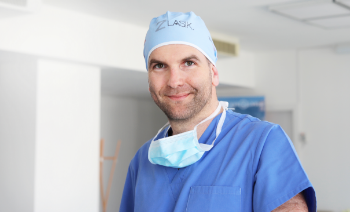
Dr. Paul Jirak is a co-founder of one of the most renowned centers for laser eye surgery in Austria and has been treating patients in Linz since 2014. He specialises in ophthalmology, optometry, eye surgery and eye lasers.
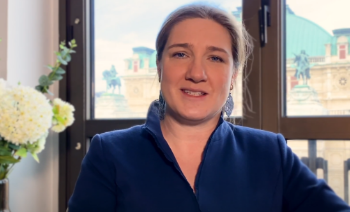
Dr. Leydolt is an ophthalmologist specialised in cataract and lens surgery. She leads a research group with this focus, trains young surgeons and gives international and national lectures.